Sound Films P
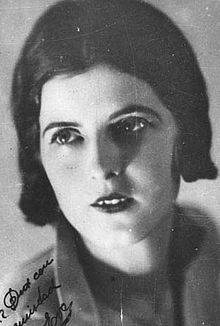
Eva Bettoni
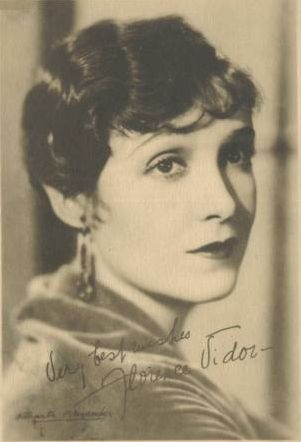
Florence Vidor
NEW SPECIAL NO FRILLS OFFER – NO ARTWORK OR CASES, SHIPPED IN PAPER SLEEVES. 3 FILMS FOR £20.00, 5 FILMS FOR £30.00 OR 10 FILMS FOR £50.00 AND NO ADDITIONAL POSTAGE CHARGES ANYWHERE IN THE WORLD!! NEW
NEW HAVE YOUR FILMS DELIVERED BY FILE TRANSFER DIRECTLY TO YOUR HOME COMPUTER FOR JUST £5.00 PER TITLE NEW
Painted Desert, The (1931)
Featuring a very early performance by Clark Gable and also starring William Boyd. Western pardners Jeff and Cash find a baby boy in an otherwise deserted emigrants' camp, and clash over which is to be "father." They are still bitterly feuding years later when they own adjacent ranches. Bill, the foundling whom Cash has raised to young manhood, wants to end the feud and extends an olive branch toward Jeff, who now has a lovely daughter. But during a mining venture, the bitterness escalates. Is Bill to be set against his own adoptive father?...£7.49
Pajama Game (1957)
Starring Doris Day. Employees of the Sleeptite Pajama Factory are looking for a whopping
seven-
Palmy Days (1931)
Directed by A.Edward Sutherland and starring Eddie Cantor, Charlotte Greenwood, Barbara Weeks and George Raft, this film has a runtime of 77 mins and the print Quality is excellent.
Plot: Musical comedy antics in an art deco bakery (motto: "Glorifying the American Doughnut") with Eddie Cantor as an assistant to a phoney psychic, who is mistaken for an efficiency expert and placed in charge. Complications ensue when the psychic and his gang attempt to rub the payroll.
Review: Palmy Days was Eddie Cantor's first original feature film, the previous two
Kid Boots and Whoopee were film adaptions of Cantor's previous Broadway successes
that presumably carried built in audiences. Palmy Days could be said to be Cantor's
first personal film success. It sure came at a time he needed it because being wiped
out in the stock market crash Cantor was working real hard to rebuild his nest egg
and support his wife and five daughters.
His innocent schnook character who turns
the tables often on bigger and cleverer foes was finding real appeal with the movie
going public. Cantor works for phony psychic Charles Middleton working all the special
effects to convince Middleton's marks during séances that their dearly departed are
actually communicating with them. One of Middleton's bigger suckers is bakery owner
Spencer Charters who employs a flock of beautiful Goldwyn Girls as his bakers. Cantor
who's been abused by Middleton decides to trip up one of his cons by getting a job
at Charters's bakery, but Charters mistakes him for someone else and hires him as
an efficiency expert. You have to love some of Cantor's brilliant ideas like sawing
the corners of Charters's desk so that folks would not be tempted to linger awhile
sitting on said corners and taking up his time.
Eddie also hooks up with Amazonian
physical culturist Charlotte Greenwood who is always a delight. The two worked well
together, they should have done more joint films. Charlotte also has the first musical
number in the film Bend Down Sister or exercising with the Goldwyn Girls. Busby Berkeley
did the choreography and while he hadn't really reached the creative heights as he
did with Warner Brothers his style is unmistakable.
Cantor gets two numbers My Baby
Said Yes Yes and There's Nothing Too Good For My Baby. Both are delivered in his
quick tempo style, Michael Jackson had nothing on Eddie Cantor when it came to moving
about on stage.
Of course Middleton is down, but not out. Cantor and Greenwood have
a hilarious climax with Middleton and his two torpedoes Harry Woods and George Raft
in the bakery. This was one of Raft's earliest films and he barely gets any dialog,
but casting him as a gangster was definitely something he could always handle.
Palmy
Days holds up well after more than 80 years, it's classic comedy is timeless and
the film is great introduction to one of the funniest men of the last century Eddie
Cantor.
Parade (1974)
Directed by, written by and starring Jacques Tati, this film has a runtime of 85 mins and the print quality is very good to excellent.
Plot: Two children go behind the scenes of a small circus.
Review: It felt slight the first time around, but, wow, this really is a great film.
It now reminds me of two other television productions from great European directors
around the same time period, Fellini's Clowns and Bergman's The Magic Flute. Many
people love those films, both very mediocre in their respective directors' canons,
but there seems to be little love for Parade. It is deliberately low-
Paradise Canyon (1935)
Starring John Wayne. Sent to find counterfeiters, John Wyatt joins Doc Carter's medicine show. They arrive in the town where Curly Joe runs his counterfeiting operation. Carter was once framed by Curly Joe and Curly Joe tries to get rid of him. But John foils his attempts and learning Curly Joe is the counterfeiter, goes after him..... £7.49
Paris Bound (1929)
Directed by Edward H.Griffith and starring Ann Harding, Fredric March, Carmelita Geraghty and Leslie Fenton, this film has a runtime of 76 mins and the print quality is OK to good.
Plot: Pre-
Review: I watched the 1929 Paris Bound, based on a play be Philip Barry and starring
Ann Harding in her film debut and Fredric March. They play a loving couple who claim
their love will never be tainted by others. March's parents caused a scandal in their
set when she divorced him after his affair. They argue at the wedding that the woman
was foolish and cost them both their home because of her divorce actions.
With that
set up we see March and Harding through their first happy years of marriage. They
are devoted but very modern. When business takes March to Paris, he goes alone. They
believe a "break" is good for their marriage and she has her work with Richard (Leslie
Fenton) on a ballet score. But into this bliss creeps the jealous Noel (Carmelita
Geraghty) who has never gotten over losing March to Harding. She sees in the society
news that March has gone to Europe alone and she chases after him.
After Harding learns
of this, she decides to have an affair with Fenton but March returns home. Will they
break up? Will they be able to patch things up? Harding is just wonderful in her
first film. She's quite natural and at ease. March is also very good. Together they
avoid the stagy acting and over pronunciation that mars other early talkies. Fenton
and Geraghty are also good. Ilka Chase takes honors among the supporting cast (also
in her film debut). Co-
Party Girl (1930)
Starring Douglas Fairbanks Jr. Review: The film itself is a social morality play about a chorus girl racket and their high rise bed hopping antics ruining young mens lives and contorting business contracts from rightful owners. It also has all those great cliche scenes of tubby old fellers in tuxedos manhandling squealing 18 year old flappers at gin parties at the office. Douglas Farbanks Jr is the handsome misled hero bedded by a floozie schemed by her conniving mother!.... £7.49
Peacock Alley (1930)
Starring Mae Murray, Jason Robards Sr and Billy Bevan, this early sound film has a runtime of 53 mins and the print quality is good to very good.
Plot: Claire Tree is a singer/dancer who goes after what she wants in a straight-
Pedestrian, The aka Der Fußgänger (1973)
Directed by Maximilian Schell and starring Peggy Ashcroft, Elisabeth Bergner, Lil Dagover and Käthe Haack, this film has a runtime of 98 mins and the print quality is very good to excellent. This is a German language film with English subtitles.
Plot: When a German businessman causes a car accident with deadly consequences, the papers start digging into his past to find scandals. What they find causes him to reevaluate his own past during WW2 when he was in Greece.
Review: When a wealthy German engineer (Gustav Rudolf Sellner) causes a car crash that kills his son, local newsmen peel back the onion to find that he may or may not have taken part in a massacre in Greece during WWII. They don't wait for any confirmation and print their story anyway. Maximillian Schell directed this haunting morality play looking into the ambiguities of guilt, shame and history. What is and isn't important in the past gets blurry as time goes on. Sellner is excellent in the title role (he's lost his license and can't drive, hence the film's title), oddly likable even as you come to realize that he may indeed be guilty. Schell infuses the film with perhaps one too many artful touches (flashbacks, dreams, slow motion), but it doesn't dull its impact. There's one scene of several dignified women at a dinner table discussing, almost gleefully, their memories of war. Peggy Ashcroft, Lil Dagover and Elisabeth Bergner are among the women. It's an odd scene in an odd, shocking movie….£7.49
Penny Serenade (1941)
Starring Cary Grant and Irene Dunne. As Julie prepares to leave her husband Roger, she begins to play through a stack of recordings, each of which reminds her of events in their lives together. One of them is the song that was playing when she and Roger first met in a music store. Other songs remind her of their courtship, their marriage, their desire for a child, and the joys and sorrows that they have shared. A flood of memories comes back to her as she ponders their present problems and how they arose.... £7.49
Pepe le Moko (1937)
Directed by Julien Duvivier and starring Jean Gabin, Mireille Balin, this film has a runtime of 93 mins and the print quality is very good. The film is French language with English subtitles.
Review: Pepe le Moko is a tragic figure -
Powerful as he is, Pepe has no friend -
The ambiance of the Casbah is a character in itself here -
Jean Gabin's Pepe is a masterpiece
of sexual appeal, savoir faire, and brilliance. Just when we think that love has
befuddled him, we see that Pepe has outfoxed us again.
He does manage to escape -
Perfect Clue, The (1935)
Directed by Robert Vignola and starring David Manners, Richard ‘Skeets’ Gallagher, Dorothy Libaire and Betty Blythe, this film has a runtime of 65 mins and the print quality is very good
Review: "The Perfect Clue" is a film that is enjoyable...but you need to turn off
your brain and just enjoy it. Otherwise, you might think of how ridiculous and improbable
the plot is...and that would ruin it.
Mona (Dorothy Libaire) is a spoiled rich girl.
When her father decides to remarry, instead of being happy for him, she stomps off
in a snit...a snit that takes her on a cross-
The fact that Mona and David fall in love is amazingly far-
Playboy of Paris, The (1930)
Directed by Ludwig Berger and starring Maurice Chevalier, Dee Frances, O.P.Heggie, Stuart Erwin and Eugene Pallette, this film has a runtime of 72 mins and the print quality is very good.
Review: This movie was a treat from start to finish-
A waiter (Maurice Chevalier) receives a vast inheritance and becomes
a club-
Maurice Chevalier and Stuart Erwin are terrific as usual. Fans of either of
these two exceptional talents will not want to miss….£7.49
Phantom Broadcast, The (1933)
Directed by Phil Rosen and starring Ralph Forbes, Vivienne Osborne, Gail Patrick, Pauline Garon and Guinn ‘Big Boy’ Williams, this film has a runtime of 71 mins and the print quality is good to very good.
Plot: A handsome radio singer has it all-
Review: I LOVED this film (I saw it on a VHS from Sinister Cinema) and was particularly
moved by Ralph Forbes' performance in the lead role of the "hunchback," who (in an
eerie foreshadowing of the Milli Vanilli scandal) provides the actual voice for a
handsome but non-
Phantom Wagon, The aka La Charrette Fantome (1939)
Directed by Julien Duvivier and starring Pierre Fresnay, Marie Bell Micheline Francey and Louis Jouvet, this is a French language film with English subtitles, it has a runtime of 87 mins and the print quality is very good to excellent.
Review: It would be interesting to know what a contemporary audience made of this
when it hit the salles in 1939; it was one of 94 French films released that year
but it's debatable whether any other wove together so many elements from other movies.
Consider: The leading lady is an officer in the Salvation Army (Major Barbara), she's
dying of TB (Camille) and spends the bulk of her working life amidst dossers and
no-
Pied Piper, The (1972)
Directed by Jacques Demy and starring Donovan, John Hurt, Michael Hordern, Jack Wild, Diana Dors and Roy Kinnear, this film has a runtime of 90 mins and the print quality is excellent.
Plot: Greed, corruption, ignorance, stupidity, and disease. Midsummer, 1349: the Black Death reaches northern Germany. A family of strolling players travel to Hamelin for the Mayor's daughter's wedding to the Baron's son. He wants her dowry to pay his army, while his father taxes the people to build a cathedral he thinks will save his soul. A local Jewish apothecary tries to find a treatment for the plague. The Priests charge him with heresy and witchcraft. A mysterious minstrel (Donovan), who joined up with the players and who has soothed the Mayor's daughter with his music, promises to rid the town of rats for a fee. The Mayor agrees, then reneges after the rats have been dealt with. In the morning, the plague, the Jew's execution, and the Piper's revenge come at once.
Review: Back when I was a (allegedly disturbed) young child, "The Pied Piper of Hamelin"
was my absolute favorite fairy-
Pittsburgh (1942)
Directed by Lewis Seiler and starring MarleneDietrich, Randolph Scott and John Wayne, this film has a runtime of 88 mins and the print quality is very good.
Plot: Charles 'Pittsburgh' Markham rides roughshod over his friends, his lovers, and his ideals in his trek toward financial success in the Pittsburgh steel industry, only to find himself deserted and lonely at the top. When his crash comes, he finds that fate has dealt him a second chance.
Review: This film is sort of like "The Spoilers II", as the three leads in this film
had just starred in THE SPOILERS and the tone and style of the two movies are so
similar. Once again, Marlene Dietrich, Randolph Scott and John Wayne star as people
who are all determined to strike it rich, and like the previous movie, they do. But
it all comes at a great cost, as Wayne slowly looses sight of what was important
in life and he slowly becomes a twisted and greedy industrialist. At the same time,
Scott and Dietrich are waiting in the wings-
The film begins during WWII and Scott is making a patriotic
speech about how everyone needs to continue giving their best for the war effort.
Then, in an office, Scott, Wayne and their old friends reminisce about the old days.
At this point, the film gos back about twenty years. All of them are poor and Scott
and Wayne are humble coal miners. However, to impress Dietrich (who wants more out
of life than to just marry a humble miner), he connives and builds himself a dandy
little empire.
Oddly, although the film is set in the 1920s, Universal Studios did
a lousy job of trying to achieve the look. Everyone dresses like they do in the 40s
and the cars are all late models-
Also,
while Wayne does a very good job of evolving into a total jerk, because the film
starts out with Wayne and Scott together, you know that eventually, Wayne changes
back to the character he was at the beginning of the film. This takes out all the
suspense, plus it seems a bit hard to believe-
Plaisir, Le (1952)
Directed by Max Ophuls and starring Jean Gabin, Danielle Darrieux, Simone Simon and Claude Dauphin, this film has a runtime of 93 mins and the print quality is very good. This is a French language film with English subtitles.
Plot: Three stories about pleasure. The first one is about a man hiding his age behind a mask to keep going to balls and fancying women, pleasure and youth. Then comes the long tale of Julia Tellier (Madeleine Renaud) taking her girls (whores) to the country for attending her niece's communion, pleasure and purity. And lastly, Jean (Daniel Gélin) the painter falling in love with his model, pleasure and death.
Review: Is it possible to take one of the best tales in French literature and make
a film even better out of it? Yes, it is. The tale is Maupassant's "La maison Tellier",
the film-
What really stuns the viewer is the central episode, the sumptuous narration of "La
maison Tellier". The story is the same in the book and in the film. A bunch of prostitutes
from "La maison Tellier", the brothel of a French province town, takes a day off
to go to a First Communion celebration in the countryside. But what a difference
of mood. The fact is that Maupassant detested and despised people, while Ophuls manifestly
loves them and is always ready to forgive their faults and pettiness. Therefore the
writer's aggressive satire is replaced by the director's gentle sense of humor. The
brothel is closed, and we shortly realize that the balance of the town, the whole
social order is upset. Some sailors start a brawl, and that looks rather expectable.
But even peaceful middle-
Then the church-
The above comments can give a partial idea of the director's extraordinary treatment
of the story. But it's important to remark that just the visual beauties and the
camera work by the genius Ophuls are largely enough to place "Le plaisir" among the
best works in the history of cinema. Let me just mention the first scene, when we
peep inside the brothel together with the outside eye of the camera, which jumps
from a window to another like a little bird. That is the most brilliant cinematic
idea I can remember. A perfect film forces a perfect job by the cast. And in fact
the acting is magnificent.
"Le plaisir" is a profound study of human beings, of their
joys and sorrows, an instance of superlative good taste in treating a risky theme,
a triumph of clever cinematic technique. A peak of the art of cinema….£7.49
Playtime (1967)
Directed by, written by and starring Jacques Tati, this film also features Barbara Dennek, Rita Maiden and France Rumilly. It has a runtime of 119 mins and the print quality is excellent.
Plot: Monsieur Hulot has to contact an American official in Paris, but he gets lost in the maze of modern architecture which is filled with the latest technical gadgets. Caught in the tourist invasion, Hulot roams around Paris with a group of American tourists, causing chaos in his usual manner.
Review: Where 'Mon oncle' was Tati's initial statement on the modern and its collision
with the old, here in 'Playtime' he reaches his conclusion. They can unite -
This
he manages to show in a series of beautiful scenes, brilliant observations, in a
Paris which has been rebuilt to the extent, where the old Frenchman doesn't find
his way around it, anymore, and the Eiffel tower can only be found in reflections
on shiny glass or steel surfaces of modern buildings.
This is a film language all
of its own, and driven to a razor sharp perfection. Through Tati's eyes, we can see
exactly what he both worries about and marvels at, and of course we feel the same.
The love he does in all his movies show for people, no matter how silly they might
be, he also shows the city itself, and its megalomaniac constructions. It's all crazy,
he tells us, but isn't it great fun, too? Yes, Jacques, it is, indeed….£7.49
Pointed Heels (1929)
Directed by A.Edward Sutherland and starring William Powell, Fay Wray and Helen Kane, Richard ‘Skeets’ Gallagher, Phillips Holmes and Eugene Pallette this film has a runtime of 58 mins and the print quality is very good.
Review: . Millionaire producer Robert Courtland (William Powell) is secretly in love
with Lora (Fay Wray) but Lora has just married Donald Ogden (Phillips Holmes), a
serious composer who is writing a symphony. He receives a telegram from his mother,
cutting off his allowance because of his marriage to a "chorus girl". He is in despair!!!
He can't do anything else but compose!!! -
Lora and Donald's marriage is not going well and Courtland,
who has never stopped carrying a torch for Lora, suggests that she leave Donald.
He invites her to his mansion so she can kick up her heels but has a change of heart
and puts a tipsy Lora to bed in a separate room. The inevitable happens -
For
the opening night Courtland gets Dot and Dash drunk, so they will put over the song
in their old way -
Even though William Powell wasn't exactly
musical, this film (his 40th) was to be quite important to him as it was the first
film to give him top billing. "Pointed Heels" was also a rare musical venture for
Fay Wray as well. Watch for Adrienne Dore as a pretty, witty chorus girl. Eugene
Palette was also good as Courtland's sidekick. Paramount was not above plugging songs
from other Paramount films in release -
Poppy (1936)
Directed by A.Edward Sutherland and starring W.C.Fields, Rochelle Hudson, Richard Cromwell, Catherine Doucet, Lynne Overman and Granville Bates, this film has a runtime of 70 mins and the print quality is excellent.
Plot: Poppy, daughter of carnival medicine salesman Professor McGargle, falls in
love with the Mayor's son. Countess Maggie Tubbs DePuizzi is claimant to the Putnam
estates, but McGargle and lawyer Wiffen plot to make Poppy claim the fortune. Wiffen
and the Countess double-
Review: POPPY (Paramount, 1936), directed by A. Edward Sutherland, stars WC Fields
as Professor Eustace McGargle, a role he originated in the 1923 stage production
of the same name, and reprized in a silent 1925 adaptation retitled SALLY OF THE
SAWDUST for United Artists, directed by D.W. Griffith, starring Carol Dempster not
as Poppy, but as Sally. This 1936 version, which premiered June 25, 2001, on Turner
Classic Movies, is said to have been more faithful to the play than the Griffith-
Set in 1883, Professor Eustace McGargle, a swindling carnival man wearing
top hat, checkered pants and spats, comes to a small town with his daughter, Poppy
(Rochelle Hudson) where he establishes himself as the prize medicine selling star
of a traveling carnival, while Poppy wanders about and meets and falls in love with
Billy Farnsworth (Richard Cromwell), a mayor's son, but because of Poppy's sideshow
background, the Farnsworth family look down on her. Only Sarah Tucker (Maude Eburne),
a matron woman, takes a liking to Poppy, and later discovers something about her
true identity that makes things right again with the Farnsworths.
Aside from the romantic
subplot between Hudson and Cromwell (who nearly resembles MGM's own Franchot Tone
when wearing that derby), Fields manages to come off with some good comedy routines,
such as cheating a bartender into buying his "talking" dog; purchasing frank-
In spite of some leisure moments, POPPY, at 73 minutes, is really
worth viewing and rediscovering to fans of the Great Tomato Nose Thanks to TCM for
bringing this rare gem back on TV again. Currently available on DVD. (***1/2)
Princess Charming (1934)
Directed by Maurice Elvey and starring Evelyn Laye, Henry Wilcoxon, Yvonne Arnaud, Max Miller, Finlay Currie and Cecil Parker, this film has a runtime of 75 mins and the print quality is very good.
Plot: Revolution breaks out in a small European kingdom, and a young princess is forced to flee for her life. She heads for the neighboring country, which just happens to be ruled by the king she is betrothed to. Unfortunately, the new revolutionary government won't let citizens leave, which she actually doesn't mind all that much because she's not particularly jazzed about marrying the elderly king. He sends a young naval officer to bring her across the border, but in order to do so they are forced into a marriage of convenience. Complications ensue.
Review: If I didn't know better, I'd have sworn I was watching a Jeanette MacDonald/Nelson
Eddy flick here. The plot is simple, the singing is divine, and anything that can
go wrong -
The basic plot goes thus: a beautiful princess, who is to be married
off to some prince that she has never met, is suddenly forced to flee her castle
and home town as the villagers revolt, many with the intention to capture the poor
princess. She has to get herself to neutral ground as quickly as possible, but then,
once there, finds that she is still not safe, and can still be captured as she is
not a citizen of the neutral territory, merely a refugee. Of course she can become
a citizen by marrying someone who lives in the neutral territory, but then, what
will her betrothed have to say about that idea?
A thoroughly enjoyable musical that
I would gladly recommend to anyone. Princess Charming has 'charmed' 9 out of 10 stars
from me….£7.49
Princess Comes Across, The (1936)
Starring Carole Lombard, Fred MacMurray, Douglass Dumbrille, Alison Skipworth, George Barbier, William Frawley, Porter Hall Lumsden Hare, Sig Ruman and Mischa Auer, this is a very good print of the film with a runtime of 76 mins.
Review: Somehow, when thinking of movie couples in the golden age of film, Carole
Lombard's partnership with Fred MacMurray gets overlooked. Not as glamorous as Tracy
and Hepburn, Hepburn and Grant, Grant and Dunne, Eddy and MacDonald, MacDonald and
Chevalier, Bogart and Bacall, it still got tremendous mileage in comedies (HANDS
ACROSS THE TABLE, TRUE CONFESSIONS), comic thrillers (THE PRINCESS COMES ACROSS),
and straight drama (SWING HIGH, SWING LOW). Lombard had the ability to make the film's
activities soar by her zaniness. MacMurray managed to anchor the film down by his
normality (and in TRUE CONFESSIONS uses this normality against itself -
THE PRINCESS COMES ACROSS made fun of thrillers (although
the dangers involved are not made funny), and of the culture of publicity that the
public thrives on. Lombard has the looks and talents to make it in movies, but nobody
cares. With the help of Alison Skipworth she pretends she is Princess Olga of Sweden
and she wants to act in movies. Besides the spoofing of Garbo, Lombard is counting
on the vast publicity from the media to get her the million dollar contract she wants.
Oddly enough, the Swedish royal family does not seem to care that a fraud is being
perpetrated by Lombard and Skipworth at their expense. But we have to make some concession
to the plot.
MacMurray is a well known musician (a concertina player of all things)
and orchestra leader. He and his manager pal, William Frawley, are on the boat as
well, and MacMurray is very interested in the beautiful, but snobbish Princess. However,
he has another problem. MacMurray is an honest fellow, but he did one bad thing,
and he is being pursued by an obnoxious little weasel (played superbly by Porter
Hall) who is waiting for a big payoff from the musician. He also seems to know the
truth about the Princess. MacMurray refuses to pay, and Hall promises him some problems.
The ship has several internationally known detectives on board (among them are Mischa
Auer, Sig Ruman, and Douglas Dumbrille), and Hall sees one of the detectives and
we see him approach to talk to him. Shortly afterward Hall is found murdered. On
top of this, there is word (sent to the ship) that an escaped murderer is thought
to be aboard (shades of Dr. Crippen), and we do see a strange little stowaway from
time to time.
The film goes on to a second murder, a set of different rival detectives
trying to solve the case, and MacMurray deciding to step in to clear himself and
the Princess. The conclusion is quiet satisfactory.
With it's cast of expert character
actors supporting MacMurray and Lombard's performances, and the clever script, THE
PRINCESS COMES ACROSS is a first rate comic thriller. I rate it 9 out of 10….£7.49
Princess Tam-
Directed by Edmond T.Greville and starring Josephine Baker, Albert Prejean, Robert Arnoux and Germaine Aussey, this film has a runtime of 77 mins and the print quality is very good. This is a French language film with English subtitles.
Plot: Max de Mirecourt, celebrated French novelist, takes a vacation from his social-
Review: Josephine Baker is such a joy to watch. She exudes grace, joy, and energy,
and it was a treat to see her sing and dance a couple of times here. Hey, I could
watch her skip among the Roman ruins in Dougge, Tunisia with the little kids for
hours, and wish the action had remained there longer. What's weird and damn unfortunate
is that despite her character being so poised and speaking French fluently, she's
still referred to as a "savage" and a "wild animal" many times by the visiting Frenchmen,
who are there to help an author get over his writer's block. They hatch an idea to
fake an interracial love affair to help with the novel and also to make the author's
wife back at home jealous. Meanwhile, she's flirting up a storm with a visiting Maharaja,
who is unfortunately played by a white actor in blackface, with similar intentions.
While
the film broaches at least the idea of miscegenation, so much so that Joseph Breen
refused to pass the film in America (which is laughable in a painful way, and yet
so predictable), it really has the two minority characters being used as pawns, and
little more. Meanwhile, it has a painful dose of cultural condescension and outright
racism in the script, something I haven't seen in other French vehicles for Baker.
In an effort to display her inferiority and need of "civilization," they show her
needing to learn basic arithmetic and shoveling food into her mouth coarsely, using
her hands. Not surprisingly, it all leads to the old "East is East and West is West"
crap, and a conclusion that Baker is better off left "uncivilized" in Africa. Argh.
You
might wonder about my rating given the attitude the film takes, but the reason for
it is simple: Josephine Baker. She's elegant in her singing, radiant in her evening
gown, and owns the dance floor, jumping into a musical performance at the end which,
while a bit Busby Berkeley-
Private Life of Henry VIII, The (1933)
Directed by Alexander Korda and starring Charles Laughton, Robert Donat, Milesc Mander, John Loder, Claud Allister, Gibb McLaughlin, Sam Livesey, Merle Oberon, Wendy Barrie, Binni Barnes and Elsa Lanchester, this film has a runtime of 94 mins and the print quality is excellent.
Plot: This movie tells the story of King Henry VIII and the last five of his six wives. Set almost entirely within the royal castle, it begins just before the death of his second wife (Anne Boleyn) and ends just after his sixth wedding (to Catherine or Katherine Parr).
Review: Alexander Korda's film about Henry VIII was a worthy Oscar winner -
Oddly,
the film begins with the execution of Anne Boleyn (Merle Oberon). We don't see the
first wife, Katherine of Aragon, at all. Wendy Barrie is Jane Seymour, the one true
love of Henry's life -
The scene-
'The Private Life of Henry
VIII' is a good play, and just when you think you know how the part is going to go,
it surprises you as all good acting should. Laughton would do other good work for
Korda (including Rembrandt a few years later) but this is one of his best remembered
roles for British cinema….£7.49
Private Lives (1931)
Directed by Sidney Franklin and based on the Noel Coward play, this film stars Norma Shearer, Robert Montgomery, Reginald Denny, Una Merkel and John Hersholt. The film has a runtime of 84 mins and the print quality is very good.
Plot: Elyot and Sibyl are being married in a big church ceremony. Amanda and Victor are being married by a French Justice of the Peace. Both couples go to a hotel on the same day and are put in adjoining rooms with adjoining terraces. Things go fine until Amanda sees her former husband Elyot on the adjacent terrace. While they both pretend to be happy, both make plans to leave, but their spouses do not want to leave as it is their respective honeymoons. So the other spouses each go down to the bar. This leaves Elyot and Amanda together and they reminisce. Before long, the sparks again fly and they both decide to leave together to the Mountains of Switzerland. They love, they bicker, they fight, they stop. Then it begins over and over. Then Victor and Sibyl show up at their chalet.
Review: I've lost count of the number of times I have seen this first-
Prix de Beaute(1930)
Starring Louise Brooks and directed by Rene Clair. Lucienne, typist and gorgeous bathing beauty, decides to enter the 'Miss Europe' pageant sponsored by the French newspaper she works for. She finds her jealous lover Andre violently disapproves of such events and tries to withdraw, but it's too late; she's even then being named Miss France. The night Andre planned to propose to her, she's being whisked off to the Miss Europe finals in Spain, where admirers swarm around her. Win or lose, what will the harvest be?.… £7.49
Pursuit To Algiers (1945)
Directed by Roy William Neil and starring Basil Rathbone, Nigel Bruce, Marjorie Riordan and Rosalind Ivan, this film has a runtime of 62 mins and the print quality is excellent.
Plot: Holmes and Watson are recruited in a serpentine fashion to escort the heir
to a European throne back to his native country following his father's assassination.
Because the prince has been educated in Great Britain, Holmes persuades him to masquerade
as Watson's nephew Nikolas on an ocean liner bound for Algiers. Unfortunately, the
ship is filled with red herrings as well as real assassins and Holmes is challenged
to outwit them all and deliver his charge to his destination. Among the suspects
are a knife-
Review: Holmes & Watson endure a PURSUIT TO ALGIERS whilst assisting a young king
to evade assassins.
Basil Rathbone & Nigel Bruce appeared as Sherlock Holmes & Dr.
Watson on screen for the twelfth time in this enjoyable fast moving film. Not the
best of the series by any means, it still offers the two wonderful actors adding
nuances to the classic characters: Holmes seems a tad more human and enjoys a kiss
from a pretty female, while Watson raises his voice to sing Loch Lomand.
The plot,
which has the intrepid duo escort a college boy monarch (Leslie Vincent) on a dangerous
cruise from Britain to North Africa, is a bit silly, but it does serve to introduce
some intriguing characters, including a frightened singer (Marjorie Riordan), a strident
fresh air fanatic (Rosalind Ivan), a nervous little fellow with a big knife (Martin
Kosleck), and a strangely obliging steward (Morton Lowry).
This film followed THE
WOMAN IN GREEN (1945) and preceded TERROR BY NIGHT (1946)
Ready to buy? Email your choices to silentfilmdvd@gmail.com and we will send you a paypal invoice. We also accept payment by cheque within the UK.
Prices including p&p are as follows:
Within UK
1 disk £7.49
3 disks £20.00
5 disks £30.00
10 disks £50.00
10 + disks £5.00 per disk
Outside UK
1 disk £8.99
3 disks £20.00
5 disks £30.00
10 disks £50.00
10+ disks £5.00 per disk
File transfer
£5.00 per title
If you want more information on any of the titles then please email us, we'll be happy to help.
Please remember if you need a film to be NTSC to make this clear when ordering
Email: silentfilmdvd@gmail.com