Sound Films T
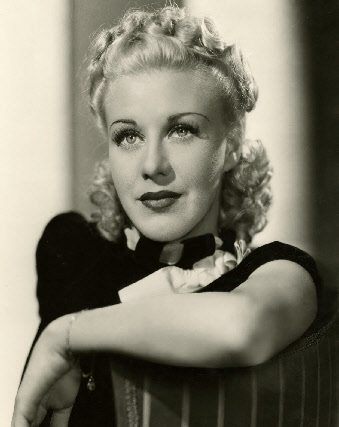
Ginger Rogers
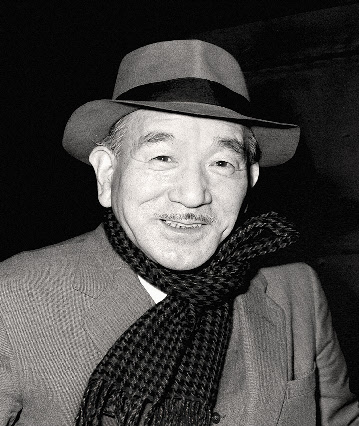
Yasojiro Ozu
NEW SPECIAL NO FRILLS OFFER – NO ARTWORK OR CASES, SHIPPED IN PAPER SLEEVES. 3 FILMS FOR £20.00, 5 FILMS FOR £30.00 OR 10 FILMS FOR £50.00 AND NO ADDITIONAL POSTAGE CHARGES ANYWHERE IN THE WORLD!! NEW
NEW HAVE YOUR FILMS DELIVERED BY FILE TRANSFER DIRECTLY TO YOUR HOME COMPUTER FOR JUST £5.00 PER TITLE NEW
Tanned Legs (1929) **UPGRADE – Improved Print**
Directed by Marshall Neilan and starring Arthur Lake, June Clyde, Dorothy Revier and Ann Pennington, this film has a runtime oif 66 mins and the print quality is very good.
Plot: Peggy and Bill are high society lovebirds, but their marriage plans are put
on hold while Peggy spends most of her summer straightening out her wayward parents
and her unlucky-
Review: I almost screamed with delight for 66 minutes through this perfect 1920s
flapper musical set in a seaside resort with lots of gorgeous girls and guys in their
cossies waving their tanned legs about to music. What a delight! Made at RKO in may
1929 TANNED LEGS is simply beautiful to see, with a snazzy modern cast singing and
dancing in the most fantastic modern 1929 clothes... and in sets that make any person
in love with the era swoon with glee. Several very funny songs include "Jump In -
Tarzan the Tiger (1929)
Serial 265mins quality is only fair. After Tarzan's estate is destroyed by Arabs Jane is sold into slavery by a man posing as a friendly scientist. Tarzan develops amnesia after a blow to the head. When he recovers his memory (from a later blow) he defeats the villain, recovers the fabulous jewels of Opar, and rescues Jane.... £7.49
Tell England (1931)
Directed by Anthony Asquith and Geoffrey Barkas, and starring Fay Compton, Tony Bruce, Carl Harbord and Dennis Hoey, this is a very good print of the film with a runtime of 82 mins.
Review: It is really a companion piece to Journeys End..However this film contains
many gripping battle scenes.The first few scenes are set before the war and show
the friendship between the two leads.They both enlist and are sent to Gallipoli.The
film follows similar lines to Journeys End.What comes through is the senseless slaughter.The
performances are very stilted.There is some fluid camera-
Testament du Docteur Cordelier, Le aka Experiment in Evil (1959)
Directed by Jean Renoir and starring Jean-
Plot: When the lawyer Joly receives the testament of his friend and psychiatrist Dr. Cordelier, Joly realizes that he is giving all his fortune and assets to his unknown patient Opale. When Joly learns that Opale is an evil man, he believes his friend is being threatened or blackmailed by Opale. Soon Opale murders a man on the street and the psychiatrist Dr. Lucien Séverin, who has a beef with Dr. Cordelier due to his experiments. After a party at Dr. Cordelier's house, his butler Désiré summons Joly since Dr. Cordelier has locked himself in the laboratory and now he is screaming in pain. Joly and Dr. Cordelier's employees break in the laboratory and find Opale inside. He asks to everyone but Joly to leave the laboratory and gives a tape to the lawyer to learn what happened with Dr. Cordelier.
Review: This is a rather unusual but successful take on the famous Dr. Jekyll and
Mr. Hyde story, written by Robert Louis Stevenson, that was first published in 1886.
In
this French take on the story the story and settings are changed to the more 'modern'
France of the '50's. But don't worry, they didn't changed the main character much,
only his name. As a matter of fact Opal is perhaps far more brutal and a bad guy
than his predecessors from earlier Dr. Jekyll and Mr. Hyde movies.
The movie is more
of a thriller and mystery movie than an horror. In that regard "Le Testament du Docteur
Cordelier" already works as a surprising and effective movie. It provides the movie
with some nice twists (especially obviously when you aren't yet familiar with the
story of Jekyll & Hyde) and original moments. Yet the movie never truly manges to
captivate the viewer with its story. It's too lacking in suspense for that.
Still
"Le Testament du Docteur Cordelier" remains a far better than average movie. This
is mainly due to its fine visual style which suits the movie well and the professional
directing from acclaimed French movie-
Jean-
Still all in all "Le Testament du Docteur Cordelier" remains
a good and surprising enough movie to satisfy its viewers. Far from the best Dr.
Jekyll and Mr. Hyde movie but a more than good and above all, original attempt, from
Jean Renoir, nevertheless….£7.49
Testament of Dr Mabuse, The (1933)
Directed by Fritz Lang and starring Rudolf Klein-
Review: Lang's last film in Germany before he hurriedly left the country (the director
claimed that he had lately been offered a key position in the Nazi-
As the present film opens, Inspector Lohmann (a splendidly
grouchy Otto Wernicke) receives a message from a former criminal associate who has
stumbled onto a massive criminal conspiracy. Before the details can be spelt out,
the crook is hunted down and killed. Investigating his disappearance Lohmann discovers
the name Mabuse scratched on a windowpane (a clue echoed in Lang's M, in which Lohmann
also appears.) Mabuse is discovered in an asylum in the charge of Dr Baum (Oscar
Beregi). The criminal genius, insane but with his remaining magnetic attraction intact,
is feverishly writing detailed notes on prospective crimes. When Mabuse dies, a visiting
Dr Kramm finds the brilliant criminal notes of Dr Mabuse on the floor, compares a
news report of a jewellery robbery to what he is now reading and tells Baum that
he is going to report it to the police. He is promptly killed by Mabuse's elite Section
2B hitmen on orders from the unseen leader -
Critics have compared the visual style
of this film with those of others from the same period, notably Spione (aka: Spies,
1928), Lang's most recent comparable social thriller. Testament is far more cluttered,
its visual confusion suggesting moral complexity as well as the closing in of threatening
events -
Modern viewers coming to Lang's film
will find much to enjoy, even if some of the incidental elements have necessarily
become a little dated. The editing and camerawork are excellent, and Rudolf Klein-
That Certain Age (1938)
Directed by Edward Ludwig and starring Deanna Durbin, Melvyn Douglas, Jackie Cooper, Irene Rich, Nancy Carroll and John Halliday, this film has a runtime of 101 mins and the print quality is very good.
Plot: Dashing reporter Vincent Bullit has just returned from covering the Spanish Civil War. His boss, newspaper magnate Fullerton, has more plans to send him off to China. However, first Fullerton invites Bullit to the peace and quiet of his own home to write a series of European affair articles. When Fullerton's adolescent daughter Alice develops a crush on Bullit, her suitor, boyscout Ken Warren, doesn't seem to stand a chance. Mr. and Mrs. Fullerton, Ken Warren, and even Vincent Bullit himself do their best to sway young Alice's feelings away from the older man. It's a difficult task though, as she is at 'that certain age.'
Review: Deanna Durbin is excellent as bright and talented rich girl Alice Fullerton.
She and her pal Ken (Jackie Cooper) put on musical plays in the guest house of her
parents' estate. Alice's newspaper mogul father invites journalist Vincent Bullitt
(Melvyn Douglas) to stay and work in said guest house—and Alice is quickly distracted
from her friends by the romantic and dashing Mr. Bullitt.
Jackie Cooper gives a superior
performance as the best friend who loves Alice and has to watch her chase after the
older, successful and glamorous man of the world. Melvyn Douglas is good as Vincent
Bullitt but his character is slightly bland, at least for someone who's supposed
to be such an adventurer.
The plot is okay if not especially surprising; it's a sympathetic
look at young love that tries to represent the viewpoints of both the kids involved
and the parents and other grownups around them. It doesn't entirely work—this is
one of those pictures where all the adults are so darn wise and well-
Deanna sings a few songs—a
couple of operatic numbers that are fine as well as a handful of new songs that are
pleasant but no classics. Durbin's acting performance, however, is superb—she is
totally convincing, as is Jackie Cooper, himself an old pro at age 16. Durbin and
Cooper certainly leave the grown up actors in the dust.
Definitely worthwhile for
fans of these young stars.
Research question: Did everybody really know Morse code
in the 1930s, or was it just kids in the movies?...£7.49
There Goes the Bride (1932)
Starring Jessie Matthews (in only her second sound film) and Owen Nares…..£7.49
Things Are Looking Up (1935)
British comedy starring Cicely Courtneidge and Max Miller. Bertha Fytte is a serious and strict schoolmistress, and not well liked by the schoolgirls. Her sister Cicely runs a nearby circus, more or less successfully, and Bertha heartily disapproves. But spinster Bertha suddenly elopes, and Cicely is induced to take her place ... only for one day. Cicely scrapes by teaching advanced geometry and finds an ally in van Gaard, the romantic American music teacher, who discloses to her that his qualifications are not 100% genuine. The school headmistress is retiring and Bertha is on the short list to get her job. Will Cicely try to succeed for her sister, and if she tries can she put on a good enough show to pull it off?....£7.49
Thirty Nine Steps (1935)
Starring Robert Donat and directed by Alfred Hitchcock, still the best version. Richard Hannay is a Canadian visitor to London. At the end of "Mr Memory"'s show in a music hall, he meets Annabella Smith who is running away from secret agents. He accepts to hide her in his flat, but in the night she is murdered. Fearing he could be accused on the girl's murder, Hannay goes on the run to break the spy ring....£7.49
Three Faces East (1930)
Directed by Roy del Ruth and starring Constance Bennett, Erich Von Stroheim, Anthony Bushell, William Holden, William Coutenay and Charlotte Walker, this film has a runtime of 71 mins and the print quality is excellent.
Plot: During World War I, English woman Frances Hawtree, a German spy known as "ZI," is sent to the estate of Sir Winston Chamberlain, first Lord of the Admiralty, to uncover information that will alert the German navy about the Atlantic crossing of the First American Division. Posing as a nurse, Frances pretends that she is returning the belongings of the Chamberlain's eldest son, who was killed in combat. Also at the estate is Chamberlain's other son, Arthur, who comes home on leave and falls in love with Frances. Unknown to the family, their seemingly humble butler, Valdar, also is a German spy and the person who masterminded Frances' mission. Valdar is charmed by Frances, but suspicious of her, and eventually realizes that she is a double agent, whose true loyalties are to the British government. When Valdar finds her sending a radiogram that will thwart the Germans' plan to sink the American ship, she momentarily hesitates, then kills him.
Review: Adapted from a successful play, "Three Faces East" is a clever spy thriller
set during WWI. Constance Bennett plays the role of Frances Hawtree aka Agent Z-
The mansion is populated with
a butler of ambiguous intentions named Valdar (Erich von Stroheim), two maids, Lady
Chamberlain, their son Arthur, and two members of Chamberlain's staff.
I found the
very beginning of the film to be overly dramatic, but the story quickly becomes more
believable, and more interesting, when Frances arrives at the Chamberlain estate.
What follows is a cat and mouse game, with twists and turns to keep the viewer guessing.
The contents of Lord Chamberlain's safe may hold the key to victory in Europe. Try
to guess the truth as alliances change and the lines between romance and duty become
blurred.
The acting is fine and Erich von Stroheim is delightful. The script is tightly
written, moving along at a brisk pace….£7.49
Three For Bedroom C (1952)
Directed by Milton H.Bren and starring Gloria Swanson, James Warren, Fred Clark,
Hans Conried and Margaret Dumont, this film has a runtime of 74 mins and the print
quality is good to very good, due to the colour being quite faded. This was Gloria
Swanson's one and only feature film following the popularity (i.e. comeback) of Sunset
Boulevard. Most of the scripts she was offered were for characters like Norma Desmond.
Instead she chose a lighthearted comedy. In both films, she plays a famous actress.
Although here she's not a has-
Plot: A film star and her young daughter stow away on a cross-
Review: Two years after her phenomenal success in SUNSET BOULEVARD, Gloria Swanson
returned to the screen in this low-
Swanson plays
Ann Haven, a runaway actress who stows away on a train headed for the West Coast.
She and her daughter (Janine Perreau) barge into the compartment and life of a famous
scientist (James Warren) who gets embroiled in their crazy Hollywood life because
Swanson's manager and publicist are also on the train.
Furious that she has been passed
over for the role of Cleopatra, Swanson is headed west to have it out with her studio.
Her yes men (Fred Clark and Hans Conried) try everything to dissuade her from quitting
the studio. In the meantime, she has a fling with the professor. Others onboard include
a ditzy socialite (Margaret Dumont), a drunk (Percy Helton), a Brandoesque actor
(Steve Brodie), and an accommodating steward (Ernest Anderson).
Swanson, who looks
terrific out of her severe Norma Desmond drag, is the whole show here as the temperamental
actress why finds love. She has a nice breezy comedy style, and after nearly 40 years
in front of the cameras (she made her film debut in 1914), she knows every trick
of the trade. Warren, stuck with the dumb-
Not the funniest film you'll
ever see, but worth a look to see the legendary Gloria Swanson in action. Despite
the "B" status of this film, Swanson was determined to not play more Norma Desmond
parts, which is what she was offered after the huge comeback she made in SUNSET BOULEVARD.
At age 52 (or so) parts were rare. Although this film was a box-
Three Smart Girls (1936)
Directed by Henry Koster and starring Deanna Durbin, Binnie Barnes, Charles Winninger, Alice Brady, Ray Milland and Mischa Auer, this film has a runtime of 84 mins and the print quality is very good.
Plot: The three Craig sisters, in Switzerland with their ten-
Review: Deanna Durbin, Nan Grey and Barbara Read are "Three Smart Girls" in this
Universal film from 1936, which introduces Deanna Durbin to film audiences. It also
stars Ray Milland, Mischa Auer, Charles Winninger, John King, Binnie Barnes and Alice
Brady. It's a sweet story about three young women, now living in Switzerland with
their divorced mother, who hear their father (Winninger) is marrying again. Not having
seen him in 10 years and knowing their mother still loves him, they board a ship
to America, with the help of the housekeeper/nanny, determined to stop the wedding.
Realizing that the intended, called "Precious" (Barnes) is nothing but a gold-
This is a delightful film, not cloying or overly sugary
at all, with some nice performances, particularly by Auer, Milland, Barnes and Brady.
The young women are pretty and all do good work. The emphasis, of course, is on young
Durbin, who is a natural actress and a beautifully-
One of the nicest things
about the film is to see the father, played by Charles Winninger, not want his children
around -
Universal gives Durbin the big
star buildup here -
Very entertaining and of course, this led to a sequel
and big stardom for Deanna….£7.49
Tiger Makes Out, The (1967)
Directed by Arthur Hiller and starring Eli Wallach, Anne Jackson, Bob Dishy and John Harkins, this film has a runtime of 94 mins and the print quality is very good.
Plot: Ben Harris, an embittered, middle-
Review: THE TIGER MAKES OUT is an urban black comedy by Murray Schisgal that stars
Eli Wallach as an alienated US mailman who life is in the toilet. He tries to kidnap
a young woman to get back at an uncaring society but snags instead, a "middle-
Sterling performances
by Wallach and Jackson and many funny bits make this a neurotic delight. There's
also a terrific supporting cast of familiar "New York" actors (and others) like Rae
Allen, Sudie Bond, Bob Dishy, Charles Nelson Reilly, Dustin Hoffman (film debut),
Ruth White, Jack Fletcher, Elizabeth Wilson, Frances Sternhagen, Bibi Osterwalkd,
Judith Lowry, etc.
I'm not sure we as a society have improved much in the 50-
To Joy aka Till Glädje (1950)
Directed by Ingmar Bergman and starring Maj-
Plot: Stig, a visiting soloist to a small Swedish orchestra, marries fellow musician
Martha, but the inner torment and sense of failure in Stig leads to an extra-
Review: Ingmar Bergman's seventh film, To Joy, is actually a fairly bitter film,
more often than not, in looking at the destructiveness of a marriage between two
people who somehow got stuck with each other to fall in love. And yet there are some
moments that are quite joyful, or at least in the terms that Bergman will allow from
time to time, and they help ring this as less a total work of despair than an examination
of 'average' people who can't stand not having more. Stig (Stig Olin) and Marta (Maj-
She's the only woman in the orchestra, but it's not exactly that they
have love at first sight in the slightest. Their connection grows following a party
where Stig gets drunk and makes a depressing grandstanding fool of himself in front
of friends, and somehow his downbeat manner is charming to Marta. Soon they grow
closer, even fall in love perhaps, though their future marriage is complicated by
Marta becoming pregnant. This scene, when she reveals it three months on to Stig,
is the first real crack in the relationship. It only cracks more, with the occasional
patch-
Bergman deals with his characters, at this stage in his career, in trying
to just find the simple and really not very simple truths of what Stig and Marta
are together and separate. For the first half it almost looks like Stig is a bit
too two-
There's a great little scene where Sanderby recounts
walking in on Stig and Marta after having some kind of odd tender moment (as well
as later on after having a quarrel), without them noticing Sanderby walk in, and
the expression still underneath their faces when he formally walks in. In typical
Bergman fashion we see the disintegration of a relationship (quite a brutal argument
in bed really, more of emotional violence than physical), even if the sort of 'patching-
So on the one hand
there is this aspect, the drama of two people having a constant push-
Probably the most
successful, and joyful, scene is when Stig finds out Marta has the baby, by running
out quick during a rehearsal, the music going along as he's on the phone, then continuing
as he sits back down, and as Sanderby asks quietly of one musician who asks another
to another to Stig what happened, as the music plays on. This, plus the second greatest
cinematic interpretation of Beethoven's 9th symphony 4th movement in a climax (the
first being Clockwork Orange), make To Joy worth seeing all by itself, if only for
Beethoven fans.
As one of the several films included on the recently released Eclipse
DVD series, To Joy will appeal to fans of Bergman's knack at telling of characters
in shattered, honest romance, and to those looking for some classical music bliss
and have seen The Magic Flute or Autumn Sonata too many times….£7.49
Toni (1935)
Directed by Jean Renoir and starring Charles Blavette, Celia Montalvan, Edouard Delmont, Man Dalban and Jenny Helia, this film has a runtime of 81 mins and the print quality is Very Good to Excellent.
Plot: In the 1920s, the Provence is a magnet for immigrants seeking work in the quarries
or in agriculture. Many mingle with locals and settle down permanently -
Review: Unrequited love is the theme, but in a twist, or from an angle that's decidedly
French. A man marries even when he knows his true love is getting wed to another
at the same time and place (a double wedding saves money). As he will come to admit
later, the fault is all his because he didn't love enough to make a play for his
amour when she was still available. At any rate, his love for her stays true even
as she takes up with yet another lover in addition to her husband. Yet there's no
judgmental tone as we observe her actions, just a woman doing what she wants, or
at times, must. Our eponymous hero, Toni, finally gets to prove his love through
sacrifice for the woman and his godchild, fulfilling the norms of the Latin melting
pot that Provence was at this time. The movie sets up the story wonderfully; indeed,
the best part of the film is the efficient and sly way the story is put in motion
when all we think is happening is an introduction of characters. The slower ensuing
pace, lack of music, stagy scenes and silent film-
Tonight or Never (1930)
Early talkie starring the delightful Gloria Swanson. A young opera singer finds her career stalled because of her cold and passionless performances, until she finds romance with a handsome admirer.... £7.49
Torment aka Hets (1944)
Written by Ingmar Bergman, directed by Alf Sjoberg and starring Stig Järrel,Alf Kjellin, Mai Zetterling and Olof Winnerstrand, this film has a runtime of 97 mins and the print quality is excellent. This is a Swedish language film with English subtitles.
Plot: Jan-
Review: Torment, one of the first winners of the grand jury prize at Cannes, brings
forth Ingmar Bergman's first screenplay to fruition (he was only in his mid twenties
when he wrote it). Although it might not be apparent, as it is an early work and
it would be another dozen or so years before his true cinematic high-
Bergman and the wonderful director Alf
Sjoberg, get a terrifying performance (albeit if it is sometimes two-
Torment, in the end, is an excellent, near-
In short,
Torment, what first set off the little spark for Bergman's career (and likely provided
Sjoberg with one of his best films) is worth looking for, if at the least for Bergman
fans wanting to check out all of his films, but one may find it to be one of Bergman's
most searing early works….£7.49
The Trail Beyond (1934)
Starring John Wayne. Early John Wayne actioner showcasing very well the Republic
Studios style at its most unbuttoned and endearing. In less than an hour there are
more thrills than in many a later picture two or three times its length. Of course
it is all terribly naive by modern standards, but watching it may give you a vague
longing for a simpler time. The one really laughable thing is the unconvincing fisticuffs,
with blows often quite obviously wide of their mark-
Transatlantic Tunnel (1935)
Starring Richard Dix and Leslie Banks. A team of international scientists and engineers attempts to build a tunnel under the ocean.... £7.49
Travelling Players, The aka O Thiasos (1975)
Directed by Theo Angelopoulos and starring Eva Kotamanidou, Vangelis Kazan, Aliki Georgouli and Kiriakos Katrivanos, this film has a runtime of 222 mins and the print quality is very good to excellent.
Plot: A group of traveling players peregrinates through Greece attempting to perform the popular erotic drama Golfo The Shepherdess. In a first level the film focuses on the historical events between 1939 and 1952 as they are experienced by the traveling players and as they affect the villages which they visit: The last year of Metaxas' fascist dictatorship, the war against the Italians, the Nazi occupation, the liberation, the civil war between left and right wingers, the British and American interventionism in the Greek politics. In a second level the characters live their own drama of jealousy and betrayal, with its roots in the ancient myth of the House of Atreus. Agamemnon, a Greek refugee from Minor Asia, goes to war against the Italians in 1940, joins the resistance against the Germans, and is executed by them after being betrayed by Clytemnestra and Aegisthos. Aegisthos, Clytemnestra's lover, is an informer and collaborator working with the German occupiers. Orestes, son of Agamemnon and Clytemnestra, fights on the side of the leftists, avenges his father's death by killing his mother and Aegisthos. He is arrested in 1949 for his guerrilla activities and is executed in prison in 1951. Electra, his sister, helps the leftists and aids her brother in avenging the treachery of their mother and Aegisthos. After the death of Orestes she continues the work of the troupe and her relationship with Pylades. Chrysotheme, Electra's younger sister, collaborates with the Germans, prostitutes herself during the occupation, sides with the British during liberation, and later marries an American. Pylades, close friend of Orestes, is a Communist who is exiled by the Metaxas regime, joins the guerrillas and is arrested and exiled again. Finally he is forced to sign a written denunciation of the left after torture by the right wing and he is released from prison in 1950.
Review: We watch movies to forget the true banality of life. Movies are packed with
witty, non-
The Traveling
Players by Angelopoulos has none of this. The dialogue is ordinary, spoken by ordinary
people, by ordinary men and women. When they speak it is not rapid-
The
beauty of The Traveling Players -
This movie should not be missed….£7.49
Trial (1955)
Directed by Mark Robson and starring Glenn Ford, Dorothy McGuire, Arthur Kennedy and John Hodiak this film has a runtime of 109 mins and the print quality is very good.
Storyline: The story of a murder trial where a Mexican boy is accused of the death
of a Caucasian girl. The two-
Review: Trial is one of the best films of the Fifties and a personal favorite of
mine in the credits of a favorite actor of mine, Glenn Ford. Made at the end of what
is loosely described as the 'McCarthy Era', Trial bravely tackles the evils of right
and leftwing extremism and shows that people of good will can make a difference in
defeating them. It's a subject I'm surprised Frank Capra didn't consider as a project.
Communist
attorney Arthur Kennedy has latched on to a case involving the death of a teenage
caucasian girl in which a young Mexican boy stands accused of her murder. In fact
we see the events as they transpire at the beginning of the film. The boy, very winningly
played by Rafael Campos has some very dubious culpability in the matter.
But in this
California town, prejudice against Mexican-
Ford does pretty
good for a while, but Kennedy who's more interested in a martyr and the stirring
up of race prejudice, gets the mother played by Katy Jurado to have Rafael take the
stand. District Attorney John Hodiak in a devastating cross examination blows the
defense wide open.
Arthur Kennedy's bravura performance as Communist attorney Barney
Castle won him an Oscar nomination, but he lost out to Jack Lemmon for Mister Roberts.
But my personal favorite in this film is the Judge played with strength and dignity
by Juano Hernandez. Judge Hernandez shows as Shakespeare put it that the quality
of mercy is indeed not strained.
I can't think of another film in that time that showed
some of the problems that scar America's soul, but also show that the cure offered
might indeed be worse.
Unseen is a state investigating committee against subversives
where Ford's been subpoened to appear. That's not modeled after McCarthy, the reference
is to a California State Senator named Jack Tenney who in that era attempted to be
a state version of McCarthy. And like McCarthy generated a lot of heat, but very
little light.
Glenn and the cast can be very proud of the work they did on this film….£7.49
Trouble in Paradise (1932)
Directed by Ernst Lubitsch and starring Miriam Hopkins, Kay Francis, Herbert Marshall, Charles Ruggles, Edward Everett Horton and C.Aubrey Smith, this film has a runtime of 82 mins and the print quality is excellent.
Plot: High class European thief Gaston Monescu meets his soul mate Lily, a pickpocket masquerading as a countess. The two join forces and come under the employ of Mme. Colet, the beautiful owner of the Colet perfume company. Gaston works as Mme. Colet's personal secretary under the alias Monsieur La Valle. Rumors start to fly as 'M. La Valle' steals Mme. Colet away from her other suitors. When the secret of his true identity catches up to him, Gaston is caught between the two beautiful women.
Review: An utterly beautiful film. I watched this for at least the umpteenth time
last night -
Lubitsch's peerless
masterpiece about two crooks (Gaston and Lily) moving amongst high society, falling
in love with each other, with high society and with high society in the attractive
shape of rich businesswoman Madame Colet falling in love with Gaston is a witty,
charming, sophisticated, erudite, relentless, sparkling etc comedy that by the finish
has had the effect of defragmenting my mind and deleting the real world for a short
while -
It's a pity that so many people
can so easily be put off by black and white photography and bygone stars who they've
never heard of; in this case what they're missing out on is near perfection, and
again another film that will still be available when all of the undisciplined uncensored
in-
Truce, The aka La Tregua (1974)
Directed by Sergio Renán and starring Héctor Alterio, Luis Brandoni, Ana María Picchio and Marilina Ross, this film has a runtime of 102 mins and the print quality is very good to excellent. This is an Argentine production in Spanish with hardcoded English subtitles. This is the first Argentine film nominated for an Academy Award for 'Best Foreign Language Film' in 1975.
Plot: A man has to come to terms with his wasted youth, estranged family and grim prospects for the future.
Review: The Truce" by the Uruguayan writer Mario Benedetti is one of the few novels
that can be qualified as "perfect"; no part is superfluous, nothing is lacking, the
story is gray and low key but deeply moving. To make a film of a work of this quality
is especially challenging; changes and omissions are necessary if only to fit the
usual length of a movie. The script by Aída Bortnik and the director Sergio Renán
rises to the challenge (the action has been transposed from Montevideo to Buenos
Aires, a minor point). Watch the film, then read the book (if possible in the original
Spanish).
What makes this movie memorable is the acting (Renan's direction of course
has to do with this). Hector Alterio "is" Martin Santomé; after watching him you
will find it difficult to imagine the character in any other way (Alterio went on
to become a top actor both in Argentina and in Spain). The rest of the cast is equally
excellent, especially Ana María Piccio as Laura Avellaneda. The veterans Lautaro
Murúa and Norma Aleandro make the most of their small (but essential) parts. The
music by Julián Plaza is just right. Very good cinematography by Juan Carlos Desanzo
who later directed some celebrated Argentine movies, such as "Eva Perón: The True
Story" (1996) and "El Polaquito" (2003)….£7.49
True Confession (1937)
Directed by Wesley Ruggles and starring Carole Lombard, Fred MacMurray, John Barrymore, Una Merkel and Edgar Kennedy, the film has a runtime of 84 mins and the print quality is very good to excellent.
Review: A witty, original black comedy made at the height of the screwball comedy
era of the 1930's. Carole Lombard's role originates the wacky wife that became a
staple in films and television. Her efforts to make her husband (Fred MacMurray)a
successful lawyer offer a still-
True to the Navy (1930)
Early talkie starring Clara Bow and Fredric March. Review: I saw a pristine print of this at Bay City, and was so blown away by Clara Bow that I just had to find a copy for myself. There was only one thing standing in my way, no one had one.... £7.49
Twentieth Century (1934)
Directed by Howard Hawks and starring John Barrymore, Carole Lombard and Walter Connolly this film has a runtime of 91 mins and the print quality is very good.
Review: Howard Hawks' early foray into screwball comedy pits the wonderful pairing
of John Barrymore and Carole Lombard against each other. She is Lily Garland, a Broadway
actress about to break in Hollywood; he's her theatrical producer and on-
There is a lot
of sparkle here, great performances from the two leads, who work together just fine,
and a screenplay which moves almost as fast as the train which gives the movie its
title. Ten years after this was made, both Barrymore and Lombard were dead, but this
stands as a fine epitaph for them together….£7.49
Twenty Four Eyes aka Nijûshi No Hitomi (1954)
Directed by Keisuke Kinoshita and starring Hideki Gôko, Itsuo Watanabe, Makoto Miyagawa and Takeo Terashita, this film has a runtime of 156 mins and the print quality is very good to excellent. This Japanese language film has English subtitles.
Plot: Schoolteacher Hisako Oishi struggles to imbue her students with a positive view of the world and their place in it, despite the fact that she knows full well that most of them will die in the war.
Review: Mostly unknown and frequently dismissed in the West, this film is often considered by the Japanese to be one of their very best films, if not their best. I concur with the Japanese. I can understand the issues people have with it, namely that it is overly sentimental, but I think it mostly earns the tears that are shed over it. It's a film in the classic teacher genre, like Goodbye Mr. Chips. Hideko Takamine plays Hisako Oishi, a young woman who begins the movie as a first grade teacher on a small island in 1928. Being a small population, she ends up staying with the same students for several years. The film ends in the 1950s, so you kind of know what will probably happen to her male students, and what she and her female students will have to experience. It may be somewhat predictable, but it's incredibly heartbreaking. The film is beautifully made, and filled with Japanese folk songs (strangely, the score of the film is made up of a bunch of Western music, including "Bonnie Annie Laurie" and "There's No Place Like Home"; it's definitely a flaw). Takamine, who starred in several Mikio Naruse films around the same time, is exceptional….£7.49
Two-
Directed by George Cukor and starring Greta Garbo, Melvyn Douglas, Constance Bennett, Roland Young, Robert Sterling and Ruth Gordon, this film has a runtime of 90 mins and the print quality is excellent.
Plot: Despite their differences, New York magazine editor Larry Blake and Ski Lodge,
Idaho ski instructor Karin Borg fall in love and get married within hours of meeting.
Those differences are Larry being urban to the core and having no desire to learn
to ski until he sees Karin, an outdoors girl to the core, her life all about healthy
living. In the sober light of day, Karin learns that Larry's vow to lead a healthy
outdoor life in Ski Lodge and hating his life and job in New York was just pillow
talk: not only has he no intention of giving up that life, but he also demands that
she move to New York with him-
Review: Every time someone mentions this film, they say something bad about it. It wasn't the best movie but I enjoyed it thoroughly. She had my attention through the whole film. I thought Garbo was way more interesting in this film than both Constance Bennett & Melvyn Douglas. Good film. I wish I still owned it and I would watch it right now!!! I love how radical she becomes when she pretends to be her "twin" sister. Melvyn Douglas was an alright character and so too Bennett, but I thought Garbo's last performance was great and I would like for this movie to get more credit. If anyone enjoys Garbo they should enjoy this film or you are just simply not that big of a Garbo fan. That's how i see it. The mysterious lady treats us with a few funny laughs. Like when she gets drunk. Not as funny as she was in Ninotchka though. Long Live Garbo!...£7.49
Ready to buy? Email your choices to silentfilmdvd@gmail.com and we will send you a paypal invoice. We also accept payment by cheque within the UK.
Prices including p&p are as follows:
Within UK
1 disk £7.49
3 disks £20.00
5 disks £30.00
10 disks £50.00
10 + disks £5.00 per disk
Outside UK
1 disk £8.99
3 disks £20.00
5 disks £30.00
10 disks £50.00
10+ disks £5.00 per disk
File transfer
£5.00 per title
If you want more information on any of the titles then please email us, we'll be happy to help.
Please remember if you need a film to be NTSC to make this clear when ordering
Email: silentfilmdvd@gmail.com