Sound Films S
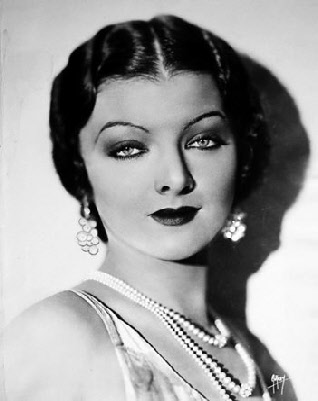
Myrna Loy
G.W.Pabst
NEW SPECIAL NO FRILLS OFFER – NO ARTWORK OR CASES, SHIPPED IN PAPER SLEEVES. 3 FILMS FOR £20.00, 5 FILMS FOR £30.00 OR 10 FILMS FOR £50.00 AND NO ADDITIONAL POSTAGE CHARGES ANYWHERE IN THE WORLD!! NEW
NEW HAVE YOUR FILMS DELIVERED BY FILE TRANSFER DIRECTLY TO YOUR HOME COMPUTER FOR JUST £5.00 PER TITLE NEW
Sabotage (1936) aka I Married A Murderer
Directed by Alfred Hitchcock and starring Sylvia Sidney, Oscar Homolka, Desmond Tester and John Loder, this film has a runtime of 77 mins and the print quality is excellent.
Plot: Mr. Verloc is part of a gang of foreign saboteurs operating out of London. He manages a small cinema with his wife and her teenage brother as a cover, but they know nothing of his secret. Scotland Yard assign an undercover detective to work at the shop next to the cinema in order to observe the gang.
Review: "Sabotage" is one of Alfred Hitchcock's least known features, but it is part
of a string of fine films he made during his last few years in England, and is well
worth watching for any Hitchcock or thriller fan. The picture is based on a classic
novel by the great Polish-
This is a tense, atmospheric
thriller, without much humor. It is more like "Vertigo", "I Confess", or "The Birds"
than "North By Northwest" or "The 39 Steps". Instead of humor, Hitchcock concentrates
this time on carefully constructing the world of the Verlocs, the family at the center
of the film. The setting, in a movie theater where the family works and lives, is
an important part of the themes and questions explored in the film.
The characters
are constantly walking in and out of the theater while movies are in progress, or
discussing the movies being shown as they go about the main actions of the (actual)
film. The obvious themes of appearance and reality parallel the lives of the Verloc
family, and especially Mr. Verloc (Oskar Homolka) whom we know from the beginning
to be a terrorist, albeit an amateurish one, and not the mild-
Hitchcock buffs will enjoy watching the film repeatedly to catch
all of the carefully crafted detail, and to enjoy the trademark Hitchcock touches.
There are two particularly riveting sequences. One occurs when Verloc sends his wife's
young, unsuspecting brother on a dangerous errand, leading to a sequence of excruciating
tension. Hitchcock later said he should have ended the sequence differently, and
many viewers might agree, but what happens is in keeping with the themes and plot
of the movie, and the suspense sequence is also masterfully done. Also well-
These
scenes, and the finely crafted atmosphere of "Sabotage", make it worthwhile despite
a few small faults, and despite the possibility that many viewers will not be comfortable
with some of the plot developments. Watch it at least once if you are a Hitchcock
fan, or if you like spy stories or thrillers….£7.49
Safety In Numbers (1930) **UPGRADE – Much improved print **
Directed by Victor Schertzinger and starring Charles “Buddy” Rogers, Carole Lombard, Kathryn Crawford and Roscoe Karns, this film has runtime of 79 mins and the print quality is very good to excellent.
Plot: William Butler Reynolds is slated to inherit ten-
Review: This Paramount musical from 1930 boasted the currently hot Buddy Rogers when
he emerged from the silents as a musical star (PARAMOUNT ON PARADE, FOLLOW THRU).
This is a sideways version of the GOLD DIGGERS films with a trio of chorus girls
on the loose and on the take (they live in a swanky apartment). But the catch here
is that the rich and naive (think Dick Powell) Rogers is sent to live with them,
with them as chaperons! Each girl is paid $10,000 to chaperon Rogers until he turns
21 and inherits $25 million.
Most of the songs here are OK but nothing special. But
"The Pick Up" is terrific as it swings through the intro, a trombone solo by Rogers,
and an astonishing bit by Louise Beavers (as the maid Messalina). I never heard her
sing before. The song ends with a chorus line of silhouettes dancing in front of
a spinning New York skyline. An amazing number.
The chorines are played by Kathryn
Crawford (who sings), Josephine Dunn (an MGM starlet loaned out to Paramount), and
Carole Lombard (of all people). Others in the cast include Richard Tucker as the
uncle, Virginia Bruce as Alma, and Roscoe Karns as the cab driver.
Rogers has a pleasing
singing voice but his acting is very shaky (yet he is likable). Crawford looks rather
dumpy. Lombard has the best line readings and you can see her future great performances
in this early talkie….£7.49
Sagebrush Trail, The (1933)
Starring John Wayne. Imprisoned for a murder he did not commit, John Brant escapes and ends up out west where, after giving the local lawmen the slip, he joins up with an outlaw gang. Brant finds out that 'Jones', one of the outlaws he has become friends with, committed the murder that Brant was sent up for, but has no knowledge that anyone was ever put in jail for his crime. Willing to forgive and forget, Brant doesn't realize that 'Jones' has not only fallen for the same pretty shop girl Brant has, but begins to suspect that Brant is not truly an outlaw....£7.49
Salute (1929)
Directed by John Ford and starring George O’Brien, Helen Chandler, William Janney, Frank Albertson, Lumsden Hare and Ward Bond, the film also features one of the many uncredited appearances by John Wayne in John Ford films of this era. It has a runtime of 84 mins and the print quality is very good.
Plot: John Randall is an Army cadet at West Point. His younger brother Paul is a
midshipman at the Naval Academy. John contrives to help Paul's timid romantic interest
in Nancy Wayne by pretending to be interested in her himself. Paul, however, takes
offense, and determines to beat his brother in the Army-
Review: Salute is an early talkie directed by John Ford and it will never rank in
anybody's list of great John Ford films. He honed this particular genre of military
academy films down to a science in much better films like The Long Grey Line and
Wings Of Eagles.
George O'Brien and William Janney are brothers raised by different
grandfathers, O'Brien by a general and Janney by an Admiral and they both go to the
service academies of each. O'Brien being older got to West Point before Janney arrived
at Annapolis.
Janney is always playing second fiddle to O'Brien and when O'Brien puts
some moves on Helen Chandler who Janney has flipped over, that makes the Army/Navy
game a bit more personal than usual.
John Wayne and Ward Bond are a pair of upper
classmen in Annapolis who take Janney over the coals. Best performance in the film
is from Frank Albertson as Janney's smart mouth roommate.
It was interesting to see
both Wayne and Bond before either of them was any kind of a name. The integration
of newsreel footage of the Army/Navy game was well done by Ford, very similar to
how he used newsreel film from Ireland in The Plough And The Stars. But Salute is
a film for John Wayne or John Ford completists….£7.49
Samourai, Le (1967)
Directed by Jean-
Plot: Hitman Jef Costello is a perfectionist who always carefully plans his murders
and who never gets caught. One night however, after killing a night-
Review: Jean-
There's also
the look of the film, provided in part by Henri Decae, who would later lens Melville's
epic Le Cercle Rouge. In the opening shot, were given the feeling of distortion on
Costello's uniquely blank one-
So,
would I recommend Le Samourai to fans of crime films? Well, it may not to those who
sole obsession are the crime films that pack all the high octane juice and gore,
such as in a John Woo or Hong-
Aside from delivering the goods in terms of the story and
as a drama, for the audience it seeks out it's highly absorbing and an example of
subtlety in cinematic grammar. It's not a crime or police movie for the mainstream
(and I'm sure some will seek this out from the under-
Sanders of the River (1935)
Directed by Zoltan Korda and starring Paul Robeson, Leslie Banks and Nina Mae McKinney, this film has a runtime of 84 mins and the print quality is very good to excellent.
Plot: British District Officer in Nigeria in the 1930's rules his area strictly but
justly, and struggles with gun-
Review: Paul Robeson is the star in this Ripping Yarn, with the British keeping the
'picaninnies' under control in Nigeria.
A number of pastoral African scenes of the
National Geographic variety (if you know what I mean) are included in this story
of the conflict between two tribes in the African heartland.
Don't believe the undergraduate
comments here -
Santa Fe Trail, The (1940)
Starring Errol Flynn and Olivia de Havilland. The story of Jeb Stewart, his romance with Kit Carson Holliday, friendship with George Custer and battles against John Brown in the days leading up to the outbreak of the American Civil War.... £7.49
Saraband For Dead Lovers, A (1948)
Directed by Basil Dearden and starring Stewart Granger, Joan Greenwood, Flora Robson, Françoise Rosay, Frederick Valk, Peter Bull, Anthony Quayle, Michael Gough and Megs Jenkins, this film has a runtime of96 mins and the print quality is excellent. This was the first Ealing studios film to be shot in colour.
Plot: Young Sophie Dorothea marries Prince George Louis but it's far from a love match. Then she falls for Swedish Count Philip Christoph von Königsmark.
Review: I have always wondered why this movie -
Saturday Night Kid (1929) ** UPDRADE – Improved print**
Directed by A.Edward Sutherland and starring Clara Bow, Jean Arthur, James Hall, Edna May Oliver and an early appearance by Jean Harlow, this film has a runtime of 63 mins and the print quality is good.
Plot: Mayme and sister Janie are salesgirls in Ginsberg's Department Store. Mayme is in love with store clerk Bill, but Janie tries to steal him from her. Hazel, another salesgirl, is Jean Harlow's first credited role.
Review: Shopgirl sisters, one fun loving but virtuous (Clara Bow), the other a conniving, selfish brat (Jean Arthur) are in love with a fellow Ginsberg department store employee (James Hall). Trite screenplay, lousy production values, terrible directing. Bow only really becomes interesting in the second half where she's finally given interesting things to do. Jean Arthur is quite good as the dissembling brat sister. James Hall is dull. Edna May Oliver does her thing (which I love) in her talkie debut, and an unbilled (and very young looking) Jean Harlow has a tiny but memorable speaking part (her first). Ultimately, this is for Bow fanatics only (I raise my hand), and for those who want to see the earliest sound film appearance of the fully formed Jean Harlow persona....£7.49
Scared to Death (1947)
Starring Bela Lugosi and George Zucco. From a slab in the morgue, a dead young woman tells the bizarre tale of how she got there, through a maze of murder involving a hypnotist, a midget and a mysterious figure in a blue mask....£7.49
Scarlet Clue, The (1945)
Directed by Phil Rosen and starring Sidney Toler, Mantan Moreland, Ben Carter and Benson Fong, this film has a runtime of 62 mins and the print quality is excellent.
Plot: Charlie Chan investigates the theft of government radar papers (the laboratory is located in the same building as a radio station!) with the help of Number Three Son Tommy and comic sidekick Birmingham Brown.
Review: Some Charlie Chan movies by Monogram are just wretched. "The Scarlet Clue",
however, is fairly well done. Lighting and camera angles make for a suitably mysterious
atmosphere. The whodunit puzzle contains a well defined group of suspects. And the
script is humorous, both the dialogue between Chan and his son, and the constant
jabber of the wonderful Mantan Moreland.
But the film seems terribly dated. The plot,
which involves WWII radar secrets in a radio station, is outmoded, and the scientific
"equipment" belongs in a museum. Moreover, production values are almost nonexistent.
There are some plot holes; and at the end, Chan never tells us how he deduced the
identity of the killer.
Overall, for those who enjoy Charlie Chan movies, "The Scarlet
Clue" is one of the better ones to watch. Everyone else will probably find this movie
lame….£7.49
Scarlet Pimpernel, The (1934)
Starring Leslie Howard, Merle Oberon and Raymond Massey. Leslie Howard plays Sir Percy Blakeney, an 18th century English aristocrat who leads a double life. He appears to be merely the effete aristocrat, but in reality is part of an underground effort to free French nobles from Robespierre's Reign of Terror. Based on the novel by Baroness Orczy….£7.49
Scenes From A Marriage aka Scener ur ett äktenskap (1973)
Directed by Ingmar Bergman and starring Liv Ullmann, Erland Josephson, Bibi Andersson and Gunnel Lindblom, this film has a runtime of 170 mins and the print quality is excellent. This is a Swedish language film with English subtitles and is a feature length version of the tv series of the same name.
Plot: Ten years of Marianne and Johan's relationship are presented. We first meet
them ten years into their marriage. He is a college professor, she a divorce lawyer.
They say that they are happily married -
Review: The lawyer Marianne (Liv Ullmann) and the professor Johan (Erland Josephson)
have been married for ten years, having two daughters. One night, Johan tells Marianne
that he met a young woman, Paula, and he will travel to Paris with her for eight
months. Caught by surprise, the perfect world of Marianne falls apart, and she starts
living alone. Along the next ten years, they meet each other in different situations,
in a relation of love and hate for each other. The first time I watched this theatrical
movie I was single and was less than twenty years old. In that occasion, I loved
the performances of Liv Ullmann and Erland Josephson, but I found the story too long.
Today, with twenty-
Second Chorus (1940)
Musical starring Fred Astaire and Burgess Meredith. Danny and Hank are surprised when Artie Shaw hires competent manager Ellen away from their college band. The two trumpet players scheme to get into Shaw's outfit themselves, each trying to trump the other's plays....£7.49
Secret Agent (1936)
Directed by Alfred Hitchcock and starring John Gielgud, Madeleine Carroll, Robert Young, Peter Lorre, Percy Marmont and Lilli Palmer, this film has a runtime of 82 mins and the print quality is very good to excellent. The story is based on the W.Somerset Maugham novel ‘Ashenden’ and the film also features Michael Redgrave and Michael Rennie in early uncredited roles.
Plot: During the first world war, novelist Edgar Brodie is sent to Switzerland by the Intelligence Service. He has to kill a German agent. During the mission he meets a fake general first and then Elsa Carrington who helps him in his duty.
Review: One of the more ignored early Hitchcock thrillers, and unjustly so. In 1916
Switzerland, Bookworm John Gielguld, Beautiful Maddeline Carroll and and Pesky, over
sexed Peter Lorre are three very unlikely enlisted civilians made to assassinate
an unknown foreign agent. One right after another fall superb Hitichcock scenes,
high on visuals, in no need of dialog. Such scenes include Gielguld and Lorre discovering
a murdered agent in a noisy Swiss church, an assassination seen through a telescope
while the victim's dog howls mournfully, a chase through a chocolate factory. What
hurts the film is Lorre's shameless overacting, and the too neat ending. It's as
if Hitchcock decided "This is beginning to ramble, let's have an explosion here."
Don't be put off by co-
Seven Keys To Baldpate (1929)
Directed by Reginald Barker and based on the George M.Cohan play, this film stars Richard Dix, Miriam Seegar, Margaret Livingston and Lucien Littlefield, it has a runtime of 72 mins and the print quality is very good.
Plot: Writer William Magee accepts a wager that he can finish writing a book in 24 hours, and travels to the deserted inn Baldpate, a summer resort now in the midst of winter, including a blizzard, to finish his opus. Told his is the only key, Magee is interrupted numerous times in the first hours by a parade of characters who appear to be in search of $200,000 meant as a bribe for a local politician, and who all seem to have an only key. As the situations become as outlandish as any he could concoct for his novel, Magee lets his infatuation with one of the "guests" get in the way of writing and solving the plot behind all that's happening at Baldpate.
Review: Always enjoyed veteran actor Richard Dix and was very surprised to view this 1929 film, which tells the story about Dix leaving New York and going to a far away place in a very cold and lonely resort mansion. Dix accepted an offer of $5,000.00 if he could write a novel in this isolated place. He was given the only key and housekeepers were informed of his arrival and heated up the place for him. Dix sits at his typewriter and starts to work on his book which he has to complete in 24 hours in order to win the bet with his friend who owns the resort
You will never be able to figure out just what happens and it is a real comedy as well as, a drama and a crime to be solved. ….£7.49
Seven Samurai aka Shichinin no samurai (1954)
Directed by Akira Kurosawa and starring Toshirô Mifune, Takashi Shimura, Keiko Tsushima, Yukiko Shimazaki, Kamatari Fujiwara and Daisuke Katô, this film has a runtime of 190 mins and the print quality is excellent. This is a Japanese language film with English subtitles.
Plot: A veteran samurai, who has fallen on hard times, answers a village's request for protection from bandits. He gathers 6 other samurai to help him, and they teach the townspeople how to defend themselves, and they supply the samurai with three small meals a day. The film culminates in a giant battle when 40 bandits attack the village.
Review: In 1954, Kurosawa made foreign film history with Seven Samurai. Everything
about this film is just absolutely terrific. The film lasts around 3 1/2 hours, and
every minute of it is unbelievable filmmaking. Kurosawa's blend of stellar craft,
captivating cinematography, ravishing art direction, and unforgettable characters
makes this one of the most intelligent films ever made. The first hour is devoted
to devoloping the many four-
Shame aka Skammen (1968)
Directed and written by Ingmar Bergman and starring Liv Ullmann, Max Von Sydow, Sigge Fürst, Gunnar Björnstrand, Birgitta Valberg and Hans Alfredson, this film has a runtime of 99 mins and the print quality is excellent. This is a Swedish language film with English subtitles.
Plot: During civil war, two musicians retreat to a rural island to farm. They are apolitical; a neighbor sometimes gives them a fish; wine is a luxury. They love each other, but there are problems: the war upsets Jan, he is weepy, too sensitive; Eva wants children, he does not. The war suddenly arrives: rebels attack, neighbors die. When the other side restores order, Jan and Eva are arrested as collaborators. After frightening and roughing them up, the local colonel releases them; then he begins appearing at their farmhouse: to talk or to pursue Eva? He gives her money. The rebels return; chaos ensues. Jan becomes violent and murderous; they flee. Can they escape? If so, to what?
Review: "Shame" ("Skammen") (Swedish, 1968): Definitely one of Ingmar Bergman's masterworks, with cinematography by Sven Nyquist (who did most of Bergman's, and some of Woody Allen's films). "Shame" is less symbolic than some of Bergman's works, and, an intense, psychological study of a married couple, Jan and Eva, (Max von Sydow & Liv Ullmann) who have their personal problems like anyone else, but suddenly find their otherwise quiet Swedish island life completely upset by a civil war. Faced with increasing losses and degradations, we watch them struggle not only against circumstances, but their own psyches. The number of "shames" depicted is huge. This story may have influenced Lina Wertmuller's film "Swept Away". Just a guess. "Shame" is an ULTIMATE in gorgeous b/w photography, and ugly psychological horror….£7.49
Shameless Old Lady, The aka La vieille dame indigne (1965)
Directed by René Allio and starring Sylvie, Malka Ribowska, Etienne Bierry, Victor Lanoux and Jean Bouise, this film has a runtime of 94 mins and the print quality is very good to excellent. This is a French language film with English subtitles.
Review: It was to be Sylvie's last part and ,although she made a brilliant career
,it was the only movie where she got the lead.It would be an insult to the users'
culture to mention all the great French works she was in.Just check her filmography,they
are all in here:Carné,Duvivier,Clouzot,Bresson,Autant-
"The shameless old lady" was a (very) short story by Bertold Brecht ("Die unwürdige
Greisin" ) from a book called "Kalender Gechichten" .The scenarists were faithful
to the German writer's spirit and they developed the plot with taste .
A sixty-
Bertold
Brecht told us so:she had two lives:the first one was a long busy one,the second
one was very short;but she ate the bread of life till its last crumbs (that's the
last line of his story) The first part of her life is summarized during the cast
and credits when old black and white photographs appear on the screen while we can
hear Jean Ferrat's beautiful song "On ne Voit Pas le Temps Passer" (=time passes
you by).The second one is the film itself and it's full of joie de vivre,it's really
a film about happiness,as "Babette's feast" would be twenty years later.
A must….£7.49
Shanghai Cobra, The (1945)
Directed by Phil Karlson and starring Sidney Toler, Mantan Moreland, Benson Fong and James Cardwell, this film has a runtime of 62 mins and the print quality is very good to excellent.
Plot: When three employees of a bank are found murdered with cobra venom, Charlie Chan connects the homicides to a case he had worked in Shanghai in 1937. Even though he arrested the alleged murderer, whom later escaped from the police, Charlie wouldn't be able to recognize him because, at the time of his apprehension, his badly burned face and hands were swathed in bandages. Although Chan believes he is now involved with a gang that is stealing valuable radium from a bank vault, utilizing tunnels that connect to the area sewer system, his new identity remains a mystery. When a detective disguised as a bank guard is found dead in a tunnel by Birmingham, Charlie knows he's on the right track….£7.49
Shirley Temple short films
12 short films from the early '30s ....£7.49
Shoeshine aka Sciuscià (1946)
Directed by Vittorio De Sica and starring Rinaldo Smordoni, Franco Interlenghi, Annielo Mele and Bruno Ortensi, this film has a runtime of 87 mins and the print quality is very good to excellent. This is an Italian language film with English subtitles and won the very first Oscar, for what would become ‘Best International Film’.
Plot: At a track near Rome, shoeshine boys are watching horses run. Two of them,
the orphan Pasquale and his younger friend Giuseppe, are riding. The pair have been
saving to buy their own horse. They meet Attilio, Giuse's much-
Review: Just two years before Vittorio De Sica changed the world with The Bicycle
Thieves (1948), the universally famous actor/director made a small, simple and beautiful
movie by the name of Shoeshine (1946). Taking place in war ravaged Italy, the film
features the stories of two young shoeshine boys who are tasked with delivering black
market goods and get caught in a web of intrigue. Once they are caught by the police,
their friendship is challenged when they're sent to an overcrowded boy's penitentiary.
The
majority of the film takes place in the penitentiary where the two boys (Franco Interlenghi
and Rinaldo Smordoni) are separated from each other almost instantly. Forced into
separate cells each holding five boys, they become the center of their own maelstroms
when one mistakenly betrays the other. I won't ruin the whole picture other than
mentioning that the main source of motivation early on is a horse they bought together.
The
period sets the tone for the film. Despite a bouncy score that highlights every small
victory experienced by the characters, the lack of sustenance and poor conditions
of life in and out of the penitentiary keeps things gloomy. The boys eat gruel which
the warden calls "passable", medical help is slow and ineffective and beds are riddled
with lice. Even one of the more kind-
The film
is considered one of the first Italian neorealist works which would leave an indelible
mark on Italian cinema and movies worldwide. The form contends with economic hardship
and moral denigration as a canvas. Many times they would shoot in and around the
streets of Italian cities and even hire non-
The Bicycle Thieves stands as the pinnacle of Italian neo-
There is a famous review of Shoeshine by the famous Pauline Kael where
she mentions a "
petulant voice of a college girl complaining to her boyfriend,
'well, I don't see what was so special about that movie.'" She then claimed alienation
from those who could not experience "the radiance of Shoeshine." In many ways I feel
the same about it. If you're not effected by De Sica's first classic then you're
not fully human.
Shoot The Pianist aka Tirez sur le pianist (1960)
Directed by Francois Truffaut and starring Charles Aznavour, Marie Dubois, Nicole Berger and Michele Mercier, this film has a runtime of 78 mins and the print quality is very good. This is a French language film with English subtitles
Plot: Once a successful concert pianist under his birth name Edouard Saroyan, Charlie
Koller is now a pianist playing honky-
Review: François Truffaut's second feature, Tirez sur le pianiste, is a deliberately
wild and chaotic satire of the American gangster pictures of the 1930s, '40s and
'50s. Truffaut tried to make Tirez sur le pianiste, or Shoot the Pianist, the complete
opposite of his first picture, The 400 Blows, doing away with the sentimentality
of the predecessor and making his second feature far more vicious, nonlinear and,
occasionally, quite funny.
Based off of a pulp novel by David Goodis, the movie is
about a once-
There are some highly
amusing scenes, such as when Charles and his soon-
Shoot the Pianist's chaotic
structure confused and overwhelmed many audiences when the film was released in 1960.
Its content (violence, nudity, etc.) was not as welcomed by audiences as it is now,
and as a result the film was a financial and critical failure. The humor was not
appreciated, the insightful look at a French Everyman was not even noticed it was
ruled out as a dud, and that's all that mattered to anyone.
Over the years it has
picked up a rather small cult following and fans of Truffaut's films have declared
it to be one of his best pictures. Looking back now in light of such recent gangster
genre hybrids such as Reservoir Dogs and Lock Stock & Two Smoking Barrels, Truffaut's
movie not only seems more understandable but far ahead of its time. In relation to
Reservoir Dogs it contains the same sort of standard, everyday nonchalance in accordance
with gangsters while it contains the narrative flow of Guy Ritchie's British gangster
cult hit.
Regardless of how brilliant Shoot the Pianist seems forty years later, Truffaut
was scarred by the negative press surrounding his second feature and never made another
movie as daring (so to speak) or, more likely, downright fun as Tirez sur le pianiste.
It's a very amusing movie, and it is one of the few 1960s films that doesn't seem
dated compared to the film-
Show of Shows, The (1929) **UPGRADE – Much Improved Print**
Directed by John G.Adolfi and starring Frank Fay, H.B.Warner, Hobart Bosworth, John Barrymore, Mary Astor, Richard Barthelmess, Noah Beery, Monte Blue, Georges Carpentier, William Collier Jr, Betty Compson, Chester Conklin, Dolores Costello, Viola Dana, Marceline Day, Sally Eilers, Douglas Fairbanks Jr, Louise Fazenda, Pauline Garon, Lloyd Hamilton, Lupino Lane, Lila Lee, Beatrice Lillie, Jacqueline Logan, Myrna Loy, Tully Marshall, Patsy Ruth Miller, Chester Morris, Jack Mulhall, Carmel Myers, Marian Nxon, Sally O’Neill, Gertrude Olmstead, Anders Randolf,RinTinTin, Ann Sothern, Ben Turpin, Alice White, Lois Wilson, Grant Withers, Loretta Young, etc.etc, this film has a runtime of 123 mins and the print quality is very good. There is a Technicolor sequence too which is also in very good shape.
Plot: It's 1929. The studio gave the cinema its voice and offered the audiences a
chance to see their favorite actors and actresses from the silent screen era. For
the first time, they can be heard in a gaudy, grandiose music comedy revue. But also
appearing are actors and actresses from the first 'talkies', stars from Broadway,
and, of course, the German shepherd Rin-
Review: THE SHOW OF SHOWS (Warner Brothers, 1929), directed by John G. Adolfi, originally
presented in early two-
In brief, THE SHOW OF SHOWS musical program
features: PROLOGUE UNIQUE: Hobart Bosworth as an executioner and HB Warner as the
victim in a brief skit set during the French Revolution; THE MILITARY PARADE: lead
by Monte Blue and marching and drum playing West Point cadets; FLORADORA GIRLS: Myrna
Loy, Marian Nixon, Ben Turpin, Lupino Lane, and many others in 1890s costumes; THE
PIRATE NUMBER: featuring Ted Lewis with motion picture pirates including Noah Beery,
Tully Marshall, etc.; EIFFEL TOWER: Georges Carpentier; RECITATIONS: Beatrice Lillie,
Louise Fazenda, Lloyd Hamilton and Frank Fay, later going into their song, "Your
Mother and Mine"; EIGHT SISTER ACT: Hosted by Richard Barthelmess, followed by sisters
including Dolores and Helene Costello singing "Meet My Sister," along with Loretta
Young and Sally Blane, Sally O'Neil and Molly O'Day, Alice and Marceline Day; Marion
Byron and Harriett Lake; and others. Following this number comes a title card that
reads INTERMISSION: TEN MINUTES (which is usually eliminated from most TV prints);
SINGING IN THE BATHTUB: Winnie Lightner, which concludes with Lightner and Bull Montana
singing "You Were Meant for Me"; IRENE BORDONI HERSELF: Bordoni singing "Just an
Hour of Love"; Chinese FANTASY: Introduced by Rin-
THE SHOW OF SHOWS is fortunate to have survived almost intact
after all these years, considering how many movies of 1929 are no longer available
for viewing. The most memorable performer besides John Barrymore (whom I wished could
have been the master of ceremonies instead of Fay), is Winnie Lightner, whose energetic
and unique comedic style, in the persona of of future vibrant singers as Martha Raye
or Betty Hutton combined, who not only sings in the bathtub, but lightens up the
rough spots by singing "Ping Pongo," And then there's Nick Lucas singing "Lady Luck"
and "That's the Only Song I Know" with his guitar.
A predecessor to the once popular
fad of TV variety shows of the 1950s and '60s, THE SHOW OF SHOWS which is one from
the time capsule, is worthy entertainment that should be viewed at least once, and
to get the feel of the bygone days of vaudeville, here captured on film Hollywood
style.
Sin of Harold Diddlebock, The (1947)
Written and directed by Preston Sturges and starring Harold Lloyd, Frances Ramsden, Jimmy Conlin, Raymond Walburn, Rudy Vallee, Edgar Kennedy, Margaret Hamilton, Arline Judge and Franklin Pangdorn, this film has a runtime of 89 mins and the print quality is very good to excellent.
Plot: Twenty years after his triumphs as a freshman on the football field, Harold
is a mild-
Review: n 1947 Preston Sturges and Harold Lloyd worked together and they came up with The Sin of Harold Diddlebock.It's a sequel for Lloyd's silent film classic The Freshman (1925).After this movie Mr.Lloyd retired from the movie business.In his last picture Harold plays a clerk who's fired from his job after twenty years.He ends up to a bar drinking and the man goes crazy.Also a lion in tow gets in a picture and lots of other funny stuff happens on a way.This movie may not be the best of Harold Lloyd, not even close, but it's mighty entertaining.And because of Harold Lloyd this movie works much better than it would have with some average comedian.Lloyd was far from average.He was Lonesome Luke and he was Glasses, which was the character that made him immortal.Lloyd may steal the show in this movie, but there are other great actors there.I could mention Jimmy Conlin, Raymond Walburn, Rudy Wallee and Edgar Kennedy.I recommend you to watch this film from 60 years back.For the Harold Lloyd fans it's a must….£7.49
Sinners In The Sun (1932) **UPGRADE – Slightly better print **
Directed by Alexander Hall and starring Carole Lombard, Chester Morris, Adrienne Ames, Alison Skipworth and Cary Grant, this film has a runtime of 70 mins and the print quality is good.
Plot: A New York fashion model finds herself being pursued by a poor but honest garage mechanic and a rich philanderer.
Review: A beautifully written and sometimes magnificently played serious movie. Chester
Morris and Carole Lombard love each other, but she is terrified of the corrosive
effects of the life of poverty that she foresees with Morris. So they break up and
drift into lives as a kept woman and a gigolo.
The two are almost perfect in their
roles; Chester Morris plays a character who is almost unable to phrase a clear thought
and pulls it off beautifully, for a wonderful payoff scene. Miss Lombard only fails
in one scene, towards the end, when she is contemplating suicide: I blame the heavy-
There is a happy ending, but it feels
forced. That is the one flaw in this movie. Otherwise it is well worth your time….£7.49
Skippy (1931)
Directed by Norman Taurog and starring Jackie Cooper and Robert Coogan, this film has a runtime of 85 mins and the print quality is excellent.
Storyline: Precocious adolescent Skippy Skinner spends most of his time trying to get around doing those things that his parents want him to do (like brush his teeth), while doing those things his parents don't want him to do. Chief among the latter is spending time across the railroad tracks in Shantytown, instead of playing with "clean" neighborhood kids like brother and sister Sidney and Eloise. Skippy's father, Dr. Herbert Skinner, the city's head of the health board, in particular doesn't like Skippy spending time there as Dr. Skinner is a verminophobe, and believes Shantytown is dirty and unhealthy. On Skippy's latest visit to Shantytown when he meets a new friend named Sooky Wayne, he learns that Shantytown is being torn down and its poor residents have to move. And Sooky's mongrel and unlicensed (since Mrs. Wayne can't afford the $3 license fee) dog Penny is captured by the city's dog catcher. As Skippy does whatever he can to raise the $3 to get Penny back for his new friend (which includes breaking into his piggy bank, holding a variety show for the Shantytown kids, and trying to ask his father for the money), Skippy learns that one person seems to be responsible for both these problems in his life, which makes the already tenuous relationship with this person even more tenuous.
Review: The film centers around two (2) characters SKIPPY (Jackie Cooper) and his
new found friend SOOKY (Robert Coogan). SKIPPY is from the right side of the tracks,
SOOKY the wrong, Shanty Town, which SKIPPY finds far more interesting then his native
haunts. Excellently directed by Norman Taurog, slighting neither the Child actors
nor the Adult supporting cast, there is a fine morality lesson here showing the importance
of friendship and loyalty, both in joyful times and in tragedy. It also shows the
importance of parental understanding for Children's problems.
Norman Taurog won the
Best Directing Oscar for his sensitive handling of what could have become maudlin.
Sad to say this film is seldom seen today nor its sequel SOOKY (1931). The film is
appropriate today for Parents to watch with their young Children ages four (4) to
eight (8) for it still has lessons of value to teach. After those ages in the 21st
Century they will be to bored or cynical to care and that's a shame….£7.49
Skyscraper Souls (1932) **UPGRADE – Improved Print**
Directed by Edgar Selwyn and starring Warren William, Gregory Ratoff, Anita Page, Verree Teasdale, Norman Foster, George Barbier, Jean Hersholt, Wallace Ford and Hedda Hopper, this film has a runtime of 99 mins and the print quality is excellent.
Plot: Aspirations and the lives of several people working at the gigantic Seacoast
National Bank Building interweave in various plots. The most notable character is
David Dwight, the womanizing bank owner who keeps his estranged wife happy by paying
for her extravagant globetrotting. Dwight's long time secretary Sarah yearns for
them to divorce so her affair with him can be legitimized. Sarah shows her good side
by playing mother to the young innocent Lynn Harding, who she employs as an assistant.
Beautiful Miss Harding is relentlessly pursued by extroverted bank teller Tom Sheppard,
but he is frustrated when Dwight lures her away with power and wealth. Then Dwight
ruins everyone's finances in a successful bid to get full control of his skyscraper
by manipulating the company's stock price. Now there doesn't appear to be anyone
who can prevent the power monger from taking advantage of the ingenue Harding-
Review: Ultra charming megalomaniac David Dwight (played by Warren William at his
most dastardly) will stop at nothing to realize his dream of having total control
of New York's tallest (it dwarfs the Empire State Building a few clouds down) skyscraper.
By way of style and guile he leads investors into a trap in order to solidify his
power base. A bit of a lecher as well he manages to seduce a new secretary who happens
to be the niece of his executive secretary / mistress. Exuding ultra confidence Dwight
triumphs in both arenas but soon finds himself out on a precarious ledge.
William
plays Dwight with passionate bravado and gentle understanding. He charms everyone,
including the audience for the first hour as he turns it on for investors and lovers
with devastating results. His drive and ambition however bring out the Mr. Hyde in
him as he callously jettisons both to achieve aim. William's, pitch perfect snake
is greatly aided by William Daniel's cinematography which captures the strikingly
lit futuristic slick and sleek interiors provided by Cedric Gibbons and company creating
an ideal stage for Dwight's messianic harangues and seductions.
The supporting cast
led by Gregory Ratoff, Verree Teasdale and Anita Page down to the minor supporting
roles of duped investors are substantive and crucial. The film's biggest misstep
is the handling of comic relief through Norman Foster's Harold Llyod like bank teller
Romeo. Granted the film is dark but Forster (who would eventually go on to become
the most commercially successful film director in history) is little more than obnoxiously
abrasive and an annoying distraction.
In addition to the fine cast and luridly engrossing
story line there is some powerful exterior imagery that makes for a powerhouse climax
as well as the surrealistic image of the newly erected, inferior sized Empire that
still has the same impact today.
Made prior to film censorship, Skyscraper Souls allows
the conniving Dwight to vividly display his duplicity with élan and without regret.
Released during the bleakest days of The Depression it is an uncompromisingly dark
portrait for its time that still resonates eight decades later amid investment house
failures and in personages that run from Trump to Madoff….£7.49
Smash & Grab (1937)
Excellent British comedy starring Jack Buchanan. One of the most original films of this genre and era. This film was a wonderful exploration of 'camp' and witty humour combined with a snappy script and charmingly silly script. I found this picture to be wonderfully entertaining and was pleasantly surprised to find it had not dated badly at all....£7.49
Soldier of Orange aka Soldaat van Oranje (1977)
Directed by Paul Verhoeven and starring Rutger Hauer, Susan Penhaligon, Edward Fox and Jeroen Krabbé, this film has a runtime of 147 mins and the print quality is very good. This is a Dutch, German and English language film with English subtitles.
Plot: This film depicts World War II through the eyes of several Dutch students. It follows them through the beginning of the war, the Nazi occupation and the liberation.
Review: This is the self-
Some Like It Hot (1959)
Directed and written by Billy Wilder this film stars Marilyn Monroe, Tony Curtis and Jack Lemmon. It also features a fine supporting cast including George Raft, Pat O’Brien and Joe E.Brown. It has a runtime of 117 mins and the print quality is excellent. This is possibly the best comedy film of all time!
Plot: When two Chicago musicians, Joe and Jerry, witness the the St. Valentine's
Day massacre, they want to get out of town and get away from the gangster responsible,
Spats Colombo. They're desperate to get a gig out of town but the only job they know
of is in an all-
Something In The Wind (1947)
Directed by Irving Pichel and starring Deanna Durbin, Donald O’Connor, John Dall, Charles Winninger and Margaret Wycherley, this film has a runtime of 89 mins and the print quality is very good to excellent. Look out also for uncredited appearances by past silent stars Betty Blythe and Stanley Blystone.
Plot: A grandson of a recently deceased millionaire mistakes a beautiful female disc jockey for her aunt, who once dated the grandfather.
Review: Deanna Durbin was at the peak of her vocal abilities on screen by the time
she made SOMETHING IN THE WIND and fortunately she has some pleasant and frequent
musical interludes sprinkled throughout what is essentially a feeble plot.
She's once
again up to her neck in a plot relying heavily on mistaken identity and pretending
to be someone she's not. Her leading men are Donald O'Connor and John Dall, the latter
being her love interest in a somewhat wooden performance. O'Connor tends to over
exert himself in some rambunctious musical numbers while Deanna not only sings some
lively numbers but also joins Jan Peerce, tenor of the Metropolitan Opera, for an
operatic aria.
Obviously the film was designed to give Deanna a new and more glamorous
look and wardrobe and some popular melodies to sing rather than the usual operatic
or semi-
Spider Woman, The (1944)
Sherlock Holmes adventure starring Basil Rathbone. In wartime Britain, Sherlock Holmes feigns death in order to investigate a spate of "pyjama suicides". His suspicions soon fall on the attractive but possibly deadly Andrea Spedding....£7.49
Spring Is Here (1930)
Directed by John Francis Dillon and starring Lawrence Gray, Alexander Gray and Bernice Claire, this film has a runtime of 69 mins and the print quality is very good.
Plot: Betty a young woman is going steady with Terry but falls for an exciting new comer to town Steve. Betty's father wants her to marry Terry but she doesn't see that she actually is in love with him. With the help of Betty's mother Emily and her sister Mary Jane Terry is able to show Betty that they are meant for each other.
Review: Actually, the songs for this film; Absence Makes The Heart Grow Fonder (For
Somebody Else), Bad Baby, Cryin' For The Carolines, Have A Little Faith In Me, How
Shall I Tell?, What's The Big Idea? were not written by R&H but by Harry Warren.
This was Harry's big break into Hollywood songwriting for the silver screen. Due
to the success of his music in this film, Harry Warren was brought out to Hollywood
for a second film, "42nd Street", which is by and large considered to be the "grand
daddy of all musicals".
Harry then left Tin Pan Alley, and signed on to write the
music for another 32 Warner Brothers films. Many of these were co-
In the end, this was the first film that
Harry wrote music for. He went on to be the most successful songwriter in Hollywood,
and that success propelled him to the top of the pop charts as well, writing 81 top
ten hits, along with eleven Oscar nominations for best song….£7.49
Spy In Black, The (1939) **UPGRADE – Improved print**
Directed by Michael Powell and starring Conrad Veidt, Valerie Hobson, Sebastian Shaw, Marius Goring and June Duprez, this film has a runtime of 79 mins and the print quality is excellent.
Plot: When a German U-
Review: During the World War, a German U-
Of
course, much more famous for The Red Shoes and A Matter of Life and Death, this film
from Powell and Pressburger should not be over looked. While it is of course propaganda
(released as it was in 1939), it is not a flag waving, lets all kill the Nazi's under
the bed style film. Instead it stands up in it's own right as an exciting little
thriller that makes some good points about the nature of war. The plot is quite straightforward
at first but has a few nice twists that I won't spoil, and is generally enjoyable.
The
strength of the film for me was the focus on a German Officer and not having him
as a stereotypical evil tyrant. While the film doesn't let us wonder who the good
guys and the bad guys are, it does at least allow Hardt to be more of a full person
and the film better as a result. The ironies of the final action of the film is clear
and is even more of a striking comment on war when you look at the `blue on blue'
stats for Gulf War 2. Veidt does well in the lead as Hardt and is partly responsible
for keeping him a bad guy without over egging the cake. Shaw and Hobson are good
but perhaps a little too much of the `Heroic Brits' about them.
Overall this is a
good wartime thriller but the unusual tack that it comes at, plus a darker and slightly
subversive tone about it helps it stand out, if not from the rest of P&P's work,
then certainly from the vast majority of wartime propaganda thrillers made in Britain
around the second world war….£7.49
Squall, The (1929) **UPGRADE – Improved print**
Directed by Alexander Korda and starring Alice Joyce, Richard Tucker, Myrna Loy, Loretta Young, Zasu Pitts and Carroll Nye, this film has a runtime of 102 mins and the print quality is excellent.
Plot: In Hungary, a prosperous and happy family of farmers take in a Gypsy girl, Nubi, when she runs away from her "cruel" master. Her fickle and seductive nature soon causes discord among the men of the household.
Review: As Hollywood was making its transition from silent pictures to talkies, 1929
is left as a year full of oddities and curios. The Squall is a 100% talking picture
and is one of the more watchable talkies from 1929. While watching The Squall or
any other talkie from 1929 one must take into account the movie was presumably filmed
with a camera in a soundproof box. It's evident the actors in The Squall have been
heavily coached by diction experts and instructed to say their line as clearly and
enunciated as possible -
So while none of the performances in The Squall bar one certain screen siren
are anything to write home about, the production values are surprisingly very high.
The Squall was directed by famed Hungarian-
However, the real reason to watch The Squall and the film's saving grace is
the one and only Myrna Loy in the overacting triumph of her long and varied career
as the scruffy, barefooted gypsy girl Nubi. The gloriously, melodramatic performance
sees this seductress manipulate three men in the same household as she tears the
once idyllic Lajos family apart. Particularly pathetic is the son Paul (Carroll Nye),
an utter simp who buys jewellery for Nubi from money he stole from his parents. I
can watch Myrna Loy in just about anything thus I can easily buy into the destructive
charm of Nubi as she over emotes in broken English and always referring to herself
in the third person -
It should come as no surprise for a film as melodramatic
at The Squall to play big with its use of symbolism and metaphor. The film's opening
shot features a Christian cross overlooking the farm and during a dinner the family
has near the film's beginning, the grandfather states that squalls are the work of
God that he "gives us shadows that we may know light. He gives us sorrow that we
may know joy. And perhaps he sends the squall that we may learn the beauty of a limpid
sky". Nubi, of whom arrives at the family home during the midst of a storm, takes
advantage of the Christian principle of sheltering the poor and homeless only to
wreak havoc -
ar Is Born, A (1937)
Starring Janet Gaynor, Fredric March and Adolphe Menjou. Review: This is the first version of the memorable Hollywood tale of young hopeful (Gaynor) trying to make it big as an actress, marries the fading actor (March) that helped her, and eventually encounters the dark side of stardom. If it sounds simple, it is, but it's undoubtly a classic picture of the 30s. Won an Oscar for Best Original Screenplay, as well as a special one for early use of Technicolor cinematography....£7.49
Star Packer, The (1934)
Starring John Wayne. John Travers and his Indian companion Yak are after the mysterious Shadow and his gang. When Sheriff Davis is killed, Travers becomes Sheriff. Catching two gang members, he learns of the room where the gang gets their orders from behind a fake wall safe and makes plans to trap the Shadow....£7.49
State Fair (1933)
Directed by Henry King and starring Janet Gaynor, Will Rogers, Lew Ayres, Sally Eilers, Norman Foster and Louise Dresser, this film has a runtime of 96 mins and the print quality is very good.
Plot: The Frake family attend the Iowa State Fair. Father Abel enters his Hampshire boar, Blue Boy, in the hog contents. Mother Melissa enters the mincemeat competition. And their children, Margy and Wayne, find love with newspaper reporter Pat Gilbert and trapeze artist Emily Joyce. But will everyone return home safe and happy or will hearts be broken?
Review: This wonderful film from Fox is rarely seen these days, and it is such a
shame. In the 1930s Janet Gaynor was a huge star, veteran of a number of silent features
with Charles Farrell and others; while Will Rogers was one of the best-
'State Fair' teams Gaynor and Rogers as daughter and
father, and adds Norman Foster as her brother, and Louise Dresser (another silent
screen veteran) as mother. They're all off to the State Fair; Wayne and Margie to
look for fun and frolics, Mother to try to win a prize for mincemeat, and Father
to get a prize for his hog, Blueboy. Will they all find the things they wish for?
Lew Ayres and Sally Eilers might just have the answers! I really liked this version;
I'm very familiar with both musical adaptations but this film is more folksy, more
fireside, more farm ... and it works very well. It's a superior product which deserves
a clean-
Stationmaster’s Wife, The aka Bolwieser (1977)
Directed by Rainer Werner Fassbinder and starring Elisabeth Trissenaar, Kurt Raab,
Bernhard Helfrich and Karl-
Plot: Lackluster, plodding stationmaster Bolweiser has the (mis)fortune to be married to the town's siren; his trusting nature leads him into serious trouble when she beds nearly every available guy.
Review: "Bolwieser" -
However, his seeming happiness breaks when
his wife starts having affairs with several men in town. Although Bolwieser is aware
that people are already gossiping that his wife has been seen nightly going ín or
coming out of the neighbors' houses, he keeps quiet: Franz Xaverl Bolwieser is an
almost Austrian soul, one of the last representatives of the K.u.K. monarchy that
fell apart with the famous shot in 1914 in Sarajevo. So, although he is a German,
he has not a ghost of a doubt that this possible infamy of his wife is the will of
a higher instance -
Storm Over Mont Blanc (1930) **UPGRADE – Improved Print With English Subtitles**
Directed by Arnold Fanck and starring Leni Riefenstahl, Sepp Rist, Ernst Udet and Mathias Wieman, this film has a runtime of 94 mins and the print quality is very good to excellent.This is a German language film with English subtitles.
Plot: In the Mont Blanc Observatory works Hannes. The only contact to the outside
world is a pilot and Hella over the morse-
Review: A few years before Leni Riefenstahl infamously filmed "Triumph of the Will", she starred in this early action flick, portraying a woman going up Mont Blanc to rescue a friend trapped by a snowstorm. When you look at how people hiked over those mountains, it starts looking like they were crazy or something; I mean, what kind of person walks that close to a crevasse?! But no matter, "Sturme uber dem Mont Blanc" is still a pretty interesting movie. I seem to recall that I heard something about Hitler seeing Ms. Riefenstahl in these sorts of movies and growing to admire her, and thus he decided that she would be the perfect person to film his propaganda documentary. Weird how these things work out…..£7.49
Stormy Weather (1935)
British comedy from the Aldwych farce team. Review: This film is wonderful. Wacky, politically incorrect and more risque than you might expect from a movie from this era. Tom Walls who plays Sir Duncan Craggs and also directed is a comic genius. Don't miss it....£7.49
Stormy Weather (1943)
Directed by Andrew L.Stone and starring Lena Horne, Bill Robinson, Cab Calloway and his Cotton Club Orchestra, Fats Waller, The Nicholas Brothers and Dooley Wilson, this film has a runtime of 78 mins and the print quality is good. This was the final film of Fats Waller. On December 15, 1943, less than five months after the film's July 21 opening in Manhattan, Waller, age 39, died of pneumonia on a train stopped at Union Station in Kansas City, Missouri. Having fallen ill during an engagement at the Zanzibar Room in Hollywood, he had boarded the Santa Fe Chief in Los Angeles and was headed for New York City.
Plot: Dancing great Bill 'Williamson' sees his face on the cover of Theatre World
magazine and reminisces: just back from World War I, he meets lovely singer Selina
Rogers at a soldiers' ball and promises to come back to her when he "gets to be somebody."
Years go by, and Bill and Selina's rising careers intersect only briefly, since Selina
is unwilling to "settle down." Will she ever change her mind? Concludes with a big
all-
Review: A sensational treat for anyone who does NOT love musicals to re wire their
brain into why 40s dance musicals are often a major discovery. In Australia in 1944
-
Strange Love of Martha Ivers, The (1946)
Excellent film starring Barbara Stanwyck. In 1928, young heiress Martha Ivers fails
to run off with friend Sam Masterson, and is involved in fatal events. Years later,
Sam returns to find Martha the power behind Iverstown and married to "good boy" Walter
O'Neil, now district attorney. At first, Sam is more interested in displaced blonde
Toni Marachek than in his boyhood friends; but they draw him into a convoluted web
of plotting and cross-
Strange Mr Victor aka L’Etrange Monsieur Victor (1938)
Directed by Jean Gremillon and starring Raimu this is a French film with English intertitles and a runtime of 95 mins. The print quality is good.
Review: One may surely speak of "L'étrange Monsieur Victor" (1938) and film noir
in the same breath, although it's not listed as such by the usual major sources.
At a minimum, it is a proto noir. I watched a 95-
The story is of a
respectable shop owner, Raimu, who has another side as a fence of stolen goods. M.
Victor is a complex character who cares for his wife and children, who prefers burglaries
to violent robberies, but who in a moment of violence kills a confederate and then
allows an innocent cobbler, Pierre Blanchar, to be convicted and imprisoned. When
Blanchar escapes, Raimu and his wife, Madeleine Renaud, take him in and hide him,
leading to a triangle when Blanchar's affection for Renaud grows. Raimu's motive
of preserving his status quo is strong as he wards off discovery and hopes to place
Blanchar in Switzerland. Raimu equally well conveys a gregarious, nervous and friendly
man as a man who can become ruthless, cunning and tough at a moment's notice.
Director
Jean Grémillon in conjunction with Werner Krien cinematographer gives us evocative
noir visuals in several places during this film. They begin with shadowy afternoon
exteriors, narrow streets, and cramped shops. They continue in Raimu's conspiratorial
back room where he ages his purloined goods and meets the thieves. The excellent
confrontation of Raimu with Georges Flamant has pure noir night lighting, capped
with a murder and ending with Raimu running a few steps to a 20 foot wall. At the
53 minute mark begins a beautifully-
The photography becomes more conventional
during that portion in which Raimu is hiding Blanchar. However, Grémillon's talent
for composition and coaxing changes in character from his cast come to the fore with
intense shots of the principals. In addition, he makes good use of the cramped quarters
and the presence of children who may interfere with Raimu's plans…..£7.49
Street Girl (1929)
Directed by Wesley Ruggles and starring Betty Compson, John Harron, Jack Oakie and Ned Sparks, this film has a runtime of 87 mins and the print quality is very good to excellent.
Storyline: Jobless, homeless and starving Freddie Joyzelle is saved by Mike Fall from the clutches of a masher, and is then invited to stay with him and his musician partners for at least two weeks. The four men call themselves The Four Seasons because of their surnames: there is also Joe Spring, Happy Winter and Pete Summer. Besides joining their group as a violinist, Freddie cooks and cleans for them and even gets them a gig at the Little Aregon restaurant after they are fired for asking for a raise at their old job. She is from the country of Aregon and knows the owner, Mr. Keppel, also from Aregon. When Prince Nicholaus of Aregon pays a visit to the restaurant and recognizes Freddie, he kisses her on the forehead, creating front page news that makes the restaurant famous. Keppel decides to open a larger restaurant because of the increase in business. Although Mike and Freddie love each other, Mike gets jealous at the attention Freddie gives the Prince, and quits the group two hours before ...
Review: The film begins with an excellent jazz combo performing. The four guys in
it all have last names like the seasons. Mike Fall is sort of the leader. After the
show, he comes upon a masher bothering a young lady, Frederika (Betty Compson). Then
he learns she's hungry and homeless and he takes her home to stay with his bandmates.
This good deed is soon rewarded, as Frederika turns out to have musical talents of
her own and she becomes part of the band. And, more importantly, she turns out to
know the prince of the fictional country from which she came. His coming to their
concert at a local restaurant suddenly makes them famous and, for once, very well
paid. However, as Mike and Frederika fall in love, you see that Mike is a very stupid
and insecure jerk-
The film works best because the
music is very enjoyable-
Street of Shame (1956)
Directed by Kenji Mizoguchi and starring Machiko Kyô, Aiko Mimasu and Ayako Wakao, this film has a runtime of 86 mins and the print quality is excellent.
Storyline: Five prostitutes work at Dreamland, in Tokyo's Yoshiwara district. As
the Diet considers a ban on prostitution, the women's daily dramas play out. Each
has dreams and motivations. Hanae is married, her husband unemployed; they have a
young child. Yumeko, a widow, uses her earnings to raise and support her son, who's
now old enough to work and care for her. The aging Yorie has a man who wants to marry
her. Yasumi saves money diligently to pay her debt and get out; she also has a suitor
who wants to marry her, but she has other plans for him. Mickey seems the most devil-
Review: Mizoguchi's swan song is one of his best, personally my second favorite film after Life of Oharu. This is the story of a group of modern day prostitutes in the red light district of Tokyo. Their sad stories are basic melodramas, but they are deeply affecting nonetheless. One is working to support her sick husband and their baby; they had planned to kill themselves until she found out she was pregnant. One went into the business to support a son who now rejects disowns her as his mother. One gets out of the business by marrying, but finds that marriage is even more demeaning than prostitution. One particularly clever one is manipulating a businessman to buy her way out of the place. Another ran away from home with an American G.I. and has begun to mimic Western attitudes and dress, which is a good selling point. Machiko Kyo is the standout as Mickey, the Westernized girl. She has the single best scene, where her father comes looking for her to bring her home. It's a stock scene, really, but Mizoguchi and Machiko Kyo turn it in a direction that I really didn't expect. I was liking the film a lot before this scene without loving it, but this bit blew me away I loved every second thereafter. Scene after powerful scene lead up to one of the most amazing final shots in a film ever. Throughout the film, we are informed that politicians are trying to outlaw prostitution. In the film, it keeps failing. Due to this film that bill was finally passed….£7.49
Struggle, The (1931)
Directed by DW Griffith (his last as director). A young couple's marriage is jeopardized by the husband's descent into alcoholism....£7.49
Study In Scarlet, A (1933)
Starring Reginald Owen and Anna May Wong. In London, a secret society led by lawyer
Thaddeus Merrydew collects the assets of any of its deceased members and divides
them among the remaining members. Society members start dropping like flies. Sherlock
Holmes is approached by member James Murphy's widow, who is miffed at being left
penniless by her husband. When Captain Pyke is shot, Holmes keys in on his mysterious
Chinese widow as well as the shady Merrydew. Other members keep dying-
Subject Was Roses, The (1968)
Directed by Ulu Grosbard and starring Patricia Neal, Jack Albertson, Martin Sheen and Don Saxon, this film has a runtime of 108 mins and the print quality is excellent.
Plot: When Timmy Cleary (Sheen), comes home from soldiering, he's greeted by the open but strained arms of his two parents, John and Nettie, (Neal and Albertson). Once considered sickly and weak, he has now distinguished himself in the service and is ready to begin a new life. His parents, however, are still trapped in the bygone days of early and unresolved marital strife and begin emotionally deteriorating through several drama packed encounters. Now mature, the young Tim Cleary finally understands the family dynamics that has played all throughout his boyhood. By the simple act of bringing his mother roses on behalf of his father, Tim realizes he may have destroyed his family, but is helpless to obtain resolution which must come from both his parents.
Review: Martin Sheen returns home from the war to the New York apartment of his parents
Patricia Neal and Jack Albertson. The return of the soldier brings to the head unspoken
hurts and slights that have flamed within this family circle for years. Neal's first
role after recovering from several strokes finds her shaky yet determined as the
long-
Such A Pretty Little Beach (1949) aka Une Si Jolie Petite Plage
Directed by Yves Allégret and starring Madeleine Robinson, Gerard Philipe, Jean Servais and Andre Valmy, this film has a runtime of 90 mins and the print quality is very good. This is a French language film with English subtitles.
Plot: During the cold and rainy off-
Review: His sensitive performance as Prince Myshkin in L'IDIOT (1946) had brought
international attention, and his performance in THE DEVIL IN THE FLESH (1947) made
him a star; with his next two films, LE CHARTREUSE DE PARME (1948) and UNE SI JOLIE
PETITE PLAGE (1949), Gerard Philipe's position as the premier leading man of French
cinema in the post-
Just as PEPE LE MOKO, QUAI DES BRUMES,
LA BETE HUMAINE and LE JOUR SE LEVE had established the Jean Gabin persona in the
1930s (what Andre Bazin had termed "the tragic destiny"), so these four films established
the Philipe persona, the sensitive young man overwhelmed by destiny. In UNE SI JOLIE
PETITE PLAGE, the small seaside resort out-
Philipe would prove to be a more versatile actor
than initially assumed; his humor, his athletic vigor, and his exuberance can be
seen in movies like FANFAN LA TULIPE and POT-
Sunny Side Up (1929)
Directed by David Butler and starring Janet Gaynor, Charles Farrell, Marjorie White, El Brendel and Mary Forbes, this film has a runtime of 122 mins and the print quality is very good to excellent.
Plot: Socialite Jack Cromwell has second thoughts about his coming marriage when finds his intended flirting. He runs off to New York to think things over and meets a Molly, a girl from a poor neighborhood, at a block party. He persuades her to return to Southhampton with him to make his fiancée jealous. His scheme works, but in the process, Molly has fallen in love with Jack. When she leaves and he faces never seeing her again, he realizes that it is Molly whom he really loves.
Review: "Sunny Side Up," a major hit in its day, still entertains probably because
of the combination of a winsome leading lady (Janet Gaynor), a game director (David
Butler) and last but not least an integrated script and score, both created by DeSylva,
Brown and Henderson at their creative peak as a trio.
The film opens with a much
admired, ambitious crane shot that explores a crowded tenement street, peering into
open windows and back out to the cobblestones. Much of the action is stagey and a
bit forced, but the spirit behind it is admirable and prefigures a more elaborate
and technically slicker sequence in "42nd Street" a few years later. This opening
panorama of a certain section of society is echoed later when the action shifts to
a garden party at a Southampton Estate.
The sweet-
Other outstanding songs are
"If I Had a Talking Picture of You" and "Turn on the Heat," the latter a playfully
erotic concept wherein Eskimo women are so sexy that they melt their icy surroundings,
transforming them into steaming, and eventually flaming, tropics. It is the only
big production number in the film, the others being focused on one or two performers
in medium close-
Supernatural (1933)
Directed by Victor Halperin and starring Carole Lombard, Randolph Scott, Alan Dinehart, Vivienne Osborne H.B.Warner and William Farnum, this film has a runtime of 64 mins and the print quality is very good to excellent.
Plot: In New York city, Ruth Rogan is convicted of killing 3 of her lovers and sentenced to be executed. Meanwhile, lovely Roma Courtenay becomes a millionaire heiress when her brother dies. A spiritualist approaches Roma with an urgent message from her dead brother. He runs a rigged seance that doesn't convince Roma's boyfriend Grant but has Roma confused. Then unexpectedly, the executed Ruth Rogan's spirit takes control of Roma's body. Roma runs off with the fake spiritualist under Ruth Rogan's control. Grant desperately tries to track Roma down and return her soul.
Review: I was quite impressed by this film. Sure it's not scary -
It is also interesting
to see Carole Lombard this early in her career -
I also find this film interesting plot-
Anyway, it is certainly interesting to see what the
makers of "White Zombie" came up with when they had the backing of a major studio….£7.49
Suzy (1936)
Directed by George Fitzmaurice and starring Jean Harlow, Franchot Tone, Cary Grant, Lewis Stone, Benita Hume and Reginald Mason, this film has a runtime of 93 mins and the print quality is very good to excellent. The flying scenes for this movie were not shot by MGM. They were outtakes from Hell's Angels (1930) filmed by Howard Hughes.
Plot: Believing that a German spy has killed her new husband (Franchot Tone), a struggling chorus girl (Jean Harlow) flees to Paris where she meets and marries a World War I pilot (Cary Grant), whose carefree ways bring unexpected results.
Review: In my mind "Suzy" is one of the best performances by Jean Harlow, who is
in virtually every scene, and who manages to underplay her role as America's sex
goddess. She isn't helped by the ridiculous Irish accent of Franchot Tone nor the
so-
Sweeney Todd, The Demon Barber of Fleet Street (1936)
Starring the aptly named Tod Slaughter. A Fleet Street barber recounts the story of Sweeney Todd, a notorious barber who in the last century murdered many customers for their money. Tod is magnificent as the demented Sweeney, "polishing off" his victims with sadistic glee.....£7.49
Ready to buy? Email your choices to silentfilmdvd@gmail.com and we will send you a paypal invoice. We also accept payment by cheque within the UK.
Prices including p&p are as follows:
Within UK
1 disk £7.49
3 disks £20.00
5 disks £30.00
10 disks £50.00
10 + disks £5.00 per disk
Outside UK
1 disk £8.99
3 disks £20.00
5 disks £30.00
10 disks £50.00
10+ disks £5.00 per disk
File transfer
£5.00 per title
If you want more information on any of the titles then please email us, we'll be happy to help.
Please remember if you need a film to be NTSC to make this clear when ordering
Email: silentfilmdvd@gmail.com